The post The 8 Best Airbnb Experiences in Tokyo appeared first on Nomadic Matt's Travel Site.
]]> Tokyo is one of those cities that feels endlessly deep. You can visit a dozen times and still discover new food stalls, hidden shrines, late-night bars, quirky subcultures, and neighborhoods that feel like completely different worlds. (I know because I’ve visited about 10 times already!)
One of my favorite ways to explore Tokyo is by taking an Airbnb Experience. Led by locals and long-term residents, these tours give you a front-row seat to Tokyo’s food culture, nightlife, history, and crafts in a way you rarely get when wandering on your own. I’ve done a lot of Airbnb Experiences in Tokyo over the years and think they are often even better than traditional tours you find on Get Your Guide (though Arigato Travel is next level and the best traditional tour company in the city so don’t miss out on them).
To help you pick from the endless Experiences you can find, below are my favorite in Tokyo that combine cultural immersion, hands-on learning, and just the right amount of fun:
Learn to Make Authentic Sushi with a Trained Chef
Sushi-making classes are common in Tokyo but this Airbnb Experience stands out because it’s done in an omakase restaurant. This class is given by a sushi master (or his apprentice). You don’t just learn how to shape rice or slice fish; you learn why certain cuts matter, how chefs season rice differently depending on style, and how to pair ingredients to highlight texture and flavor. The class is hands-on and surprisingly approachable. It’s a small group experience done in the morning so you can have a filling and fun breakfast experience before going out to explore Tokyo. I absolutely loved it.
Shibuya Nightlife with Unlimited Drinks
This is my favorite nightlife tour in Tokyo. The host, Suemi, and her friends provide the absolute best time. This Shibuya nightlife tour one takes you to 3-4 izakaya spots that are very untouristy and filled without locals. You get unlimited food and drinks and it’s a really great experience. My guide, Shugo, was outgoing, spoke conversational English, handled large group dynamics well, was entertaining, explained the culture of izakaya restaurants in detail, and stayed past when the Experienced ended. He was great!
Additionally, Suemi and her friends also run an unlimited Sake tasting class, which is the best Sake class I’ve done in Tokyo. They go into incredible detail about how sake is made and use a lot of visuals so it’s really easy to understand. It’s a small group of six, which made the Experience really personable. If you take a Sake experience, take this one. (They also un a whiskey tasting experience that I haven’t done this one yet but I bet it’s just as good).
Shinjuku Izakaya Tour
This experience is similar in spirit to the Shibuya nightlife tour but set in one of Tokyo’s other major nightlife hubs. Shinjuku is packed with tiny izakaya spots, many of them hidden in narrow alleyways or upstairs spaces you’d never think to enter on your own. On this tour, Yuma (a knowledgeable sake sommelier) takes you to several of these small, local spots and walks you through how izakaya culture really works.
You’ll try different styles of sake along the way and learn how to read menus, what to order, and how locals typically drink and eat in these settings. Yuma is outgoing, fun, and very good at explaining things clearly without overwhelming you. It’s social, relaxed, and a great way to experience Shinjuku nightlife without feeling lost or intimidated.
Historic Tokyo Walking Tour
This is one of the most educational experiences I’ve done in Tokyo. Instead of focusing on the usual tourist areas, this tour explores quieter neighborhoods that retain a strong connection to the city’s past. The host is a lecturer specializing in Japanese history and traditional culture, and it really shows in the depth of information shared throughout the walk.
You’ll visit places like Nezu Shrine, walk through its tunnel of red torii gates, explore the old streets of Yanaka, and learn about the Edo period, the Meiji Restoration, and how the role of the samurai changed as Japan modernized. It’s a 2.5-hour walk that never feels rushed and gives you a much clearer understanding of how Tokyo became the city it is today. I learned a lot from this tour.
Tokyo Coffee Culture Tour
Tokyo has an burgeoning coffee scene and this tour does a great job of showing it to you. You explore Jimbocho and Kanda, two very under visited neighborhoods, to learn about both old-school kissaten and modern specialty cafés. You’ll learn about brewing techniques, flavor profiles, and how Japan developed such a meticulous approach to coffee.
The tour includes visits to historic cafés, specialty shops leading Tokyo’s third-wave movement, and even wagashi shops where you’ll learn how traditional Japanese sweets pair with coffee. It’s a really thoughtful and unique afternoon experience.
Organic matcha Tea Ceremony
This one-hour experience is a great introduction to matcha and Japanese tea culture. You’ll learn about the history of matcha, its role in Japanese society, and how to tell high-quality matcha from lower-grade varieties. The host walks you through the traditional preparation process step by step. You’ll whisk and taste authentic matcha in a calm, traditional setting that feels worlds away from Tokyo’s busy streets. It’s short but memorable, and it gives you a much deeper appreciation for something you’ll see everywhere while traveling in Japan.
Tokyo Ramen Tour
Ramen is synonymous with Japanese food, and this tour helps you understand why it inspires such devotion. Over the course of about three hours, you’ll visit multiple ramen shops, each highlighting a different style or approach.
You’ll learn about ramen’s origins, modern trends, and regional variations while tasting everything from classic bowls to more experimental or fusion styles. The guide explains broth types, noodle textures, and toppings in a way that’s easy to follow. Come hungry as this tour will absolutely fill you up!
Shibuya and Harajuku Street Art Tour
This tour takes you through Shibuya and Harajuku to see murals and installations hidden in alleyways and less obvious spaces. Street art is a much quieter, more underground scene in Tokyo (they Japanese aren’t so keen on murals on their buildings) so learning about where it is allowed and how the culture thrives in such a restrictive environment is really interesting. he tour also includes visual examples of murals before and after they were created, which adds helpful context. I think it is one of the most interesting and unique Airbnb Experiences and gives you a really good look at a side of Japan most people don’t see!
There’s a lot of Airbnb Experiences in Tokyo and I know I’m probably I’m missing some really great ones (After all, I’m only one person) but these eight will give you a good start. Try to do at least one when you’re in Tokyo because most conventional organized tours are all cookie cutter experiences. These Airbnb tours are way more fun!
Book Your Trip to Tokyo: Logistical Tips and Tricks
Book Your Flight
Use Skyscanner to find a cheap flight. They are my favorite search engine because they search websites and airlines around the globe so you always know no stone is left unturned.
Book Your Accommodation
You can book your hostel with Hostelworld as they have the biggest inventory and best deals. If you want to stay somewhere other than a hostel, use Booking.com as they consistently return the cheapest rates for guesthouses and cheap hotels.
For places to stay, check out my article on my favorite hostels in Tokyo. If you want to stay in a hotel, check out this list of favorites.
And, for a neighborhood by neighborhood breakdown of Tokyo, check out this post.
Don’t Forget Travel Insurance
Travel insurance will protect you against illness, injury, theft, and cancellations. It’s comprehensive protection in case anything goes wrong. I never go on a trip without it as I’ve had to use it many times in the past. My favorite companies that offer the best service and value are:
- Safety Wing (for everyone below 70)
- Insure My Trip (for those over 70)
- Medjet (for additional evacuation coverage)
Looking for the Best Companies to Save Money With?
Check out my resource page for the best companies to use when you travel. I list all the ones I use to save money when I’m on the road. They will save you money when you travel too.
Be sure to check out the Japan Rail Pass if you’ll be traveling around the country. It comes in 7-, 14-, and 21-day passes and can save you a ton of money!
Want More Information on Tokyo?
Be sure to visit my robust destination guide on Tokyo for even more planning tips!
The post The 8 Best Airbnb Experiences in Tokyo appeared first on Nomadic Matt's Travel Site.
]]>The post Why Your Airfare is So Expensive appeared first on Nomadic Matt's Travel Site.
]]>
I’ve been traveling for close to twenty years. In that time, the airline industry has changed a lot. The use of points and miles has become widespread, round-the-world tickets have gone the way of the dodo, airlines have consolidated, and there has been an explosion of budget airlines.
Over the last few years, the cost of airline tickets has steadily risen. They get more and more expensive while their prices often seem illogical.
Since ticket pricing is an arcane and misunderstood subject, I want to take some time to explain why your airplane ticket costs what it does.
A Look at the Airline Industry
Ticket prices have increased over the decade for several reasons. For starters, the industry has consolidated a lot over the last few decades. Thanks to bankruptcies and mergers, there are now only three major alliance airlines (American, Delta, and United) in the United States. And, with the recent bankruptcy of Spirit and the merger of Alaska and Hawaiian, there’s even less competition outside the Big 3.
In Canada, there are only two major airlines – WestJet and Air Canada.
In Europe, Air France–KLM, British Airways IAG, and Lufthansa control the bulk of the market. (Though, thankfully, in Europe, there are lots of budget airlines to choose from.)
As airlines have partnered up, merged, or gone bankrupt, there is little incentive to provide low fares to win your business. After all, when only one or two airlines are flying a route, airlines know you don’t have much choice. Less competition means higher prices.
Secondly, the price of airline fuel has increased tremendously. Back in 2017, jet fuel cost $1.37 per gallon. In 2024, it is $6.49 per gallon! Airlines have simply passed that fivefold increase on to the consumer.
Thirdly, airline taxes and security fees have increased a lot, adding to the cost of your ticket. Ever fly into London? Half the ticket price is made up of fees and taxes!
Finally, demand fell following the 2008 recession, and to compensate, airlines reduced both the number of routes they offered and the frequency of their flights. Fuller planes mean more passenger revenue and fewer costs for the airline.
That trend greatly accelerated during COVID. When COVID shut down global travel, airlines mothballed many of their older planes and laid off many of their staff. When travel restrictions were lifted and more people started flying again, they didn’t have enough planes or staff to return to a pre-COVID schedule. This decrease in the supply of flights, coupled with the surge in demand for travel, meant that airlines had little incentive to lower prices.
According to Rick Seaney of Farecompare.com, “Before 2008, things were in favor of the passengers. After the 2009 crisis, the scale of justice tipped towards the airlines.”
Taken together, a consolidated airline industry that is facing more costs is simply less likely to generally offer lower fares.
How Airlines Determine Pricing
Prices go up and down for many reasons. There are four major factors that drive prices are competition, supply, demand, and oil prices.
Together, those four things affect something called “the load factor.” Airlines want to fill their planes and maximize profits, and they do this by calculating a plane’s load factor. Essentially, this is the percentage of seats sold on a flight. They want this number to be as high as possible.
To get the highest possible load factor, airlines will constantly change prices based on the four categories above in order to get people to buy tickets.
Airlines use dynamic pricing models and artificial intelligence (AI) to figure out the maximum value they can get for each seat. Have you ever wondered why airlines seem to callously raise their prices after a big event spikes demand? They aren’t. The AI is. All it sees is sky-high demand and adjusts accordingly to its programming. More demand = higher prices.
These advanced computer systems constantly compare booking trends to past sales history, major events, concerts, sporting events, weather, and competitor behavior. They can look at consumer searching and booking behavior and process lots and lots of data and change prices on the fly (no pun intended) in hopes of getting the best price possible.
All of this is why one day a flight may cost $100, then $400 the next, and then back to $100 the day after that. As people buy seats on a flight, airlines raise prices, and when demand falls (at a certain price point), they lower prices until fewer and fewer seats are available, then they will raise prices again. It’s a delicate balance designed to ensure maximum revenue. It’s why prices are cheapest for 5 AM flights, more expensive over the holidays, and through the roof during peak season or if there’s a major sports event in town.
After all, you can’t add more seats to a plane, so all they can do to raise revenue is charge higher fares!
It’s also why prices might change in seconds. It’s not because they are tracking your cookies, it’s because the AI is responding to real-time changes in seats. Think about it. How many booking companies are out there? Lots! All of them are reserving seats. Millions of people fly each day and, with limited routes, it’s easier to fill planes, so the AI doesn’t need to discount fares as much as it had to in the past.
On a US domestic flight, there might be 10–15 different price points. If the load factor is low and demand is low, an airline will increase the availability of cheap fares. If the load factor is high and demand is high, the airline will raise prices.
As Rick said, the airline is advantaged now.
But it’s not impossible to find a cheap ticket. There are many, many ways to find cheap airfare. To avoid being the person who paid the most for their ticket, the main thing to do is to be flexible.
Airlines are constantly changing prices to increase revenue, hoping to get people into the highest price buckets possible. “About three months before, airlines start to manage those bottom price points,” Rick says. That means airlines begin to look at historical trends and current seat sales to figure out whether they will release those really rock-bottom fares or keep prices high.
If you’re booking inside a month, you’re playing into the airline’s hands. When your dates are no longer flexible, you’ll pay whatever they charge.
To find out how to navigate this system and get a cheap flight, check out these articles I wrote:
- How to Get Cheap Flights
- How to Use Airline Credit Cards for Free Flights
- How I Search for Airline Tickets
The days of cheap airfares are long over. They aren’t coming back, and the prices you see now are the new normal for airline tickets. They are simply going to cost a lot more, especially if you don’t find the sweet spot when prices are their lowest.
But by understanding how tickets are priced, you can avoid being the person who pays the most.
How to Travel the World on $75 a Day
My New York Times best-selling book to travel will teach you how to master the art of travel so that you’ll get off save money, always find deals, and have a deeper travel experience. It’s your A to Z planning guide that the BBC called the “bible for budget travelers.”
Book Your Trip: Logistical Tips and Tricks
Book Your Flight
Find a cheap flight by using Skyscanner. It’s my favorite search engine because it searches websites and airlines around the globe so you always know no stone is being left unturned.
Book Your Accommodation
You can book your hostel with Hostelworld. If you want to stay somewhere other than a hostel, use Booking.com as it consistently returns the cheapest rates for guesthouses and hotels.
Don’t Forget Travel Insurance
Travel insurance will protect you against illness, injury, theft, and cancellations. It’s comprehensive protection in case anything goes wrong. I never go on a trip without it as I’ve had to use it many times in the past. My favorite companies that offer the best service and value are:
- SafetyWing (best for budget travelers)
- World Nomads (best for mid-range travelers)
- InsureMyTrip (for those 70 and over)
- Medjet (for additional evacuation coverage)
Want to Travel for Free?
Travel credit cards allow you to earn points that can be redeemed for free flights and accommodation — all without any extra spending. Check out my guide to picking the right card and my current favorites to get started and see the latest best deals.
Need a Rental Car?
Discover Cars is a budget-friendly international car rental website. No matter where you’re headed, they’ll be able to find the best — and cheapest — rental for your trip!
Need Help Finding Activities for Your Trip?
Get Your Guide is a huge online marketplace where you can find cool walking tours, fun excursions, skip-the-line tickets, private guides, and more.
Ready to Book Your Trip?
Check out my resource page for the best companies to use when you travel. I list all the ones I use when I travel. They are the best in class and you can’t go wrong using them on your trip.
The post Why Your Airfare is So Expensive appeared first on Nomadic Matt's Travel Site.
]]>The post Capital One Venture X Business Card Review: Is It Worth It? appeared first on Nomadic Matt's Travel Site.
]]>
I’m a sucker for a good travel rewards card. Over the years, I’ve collected a small handful of them — not because I love juggling annual fees, but because the right cards can save you a lot of money on flights, hotels, and travel perks you’d otherwise pay out of pocket for.
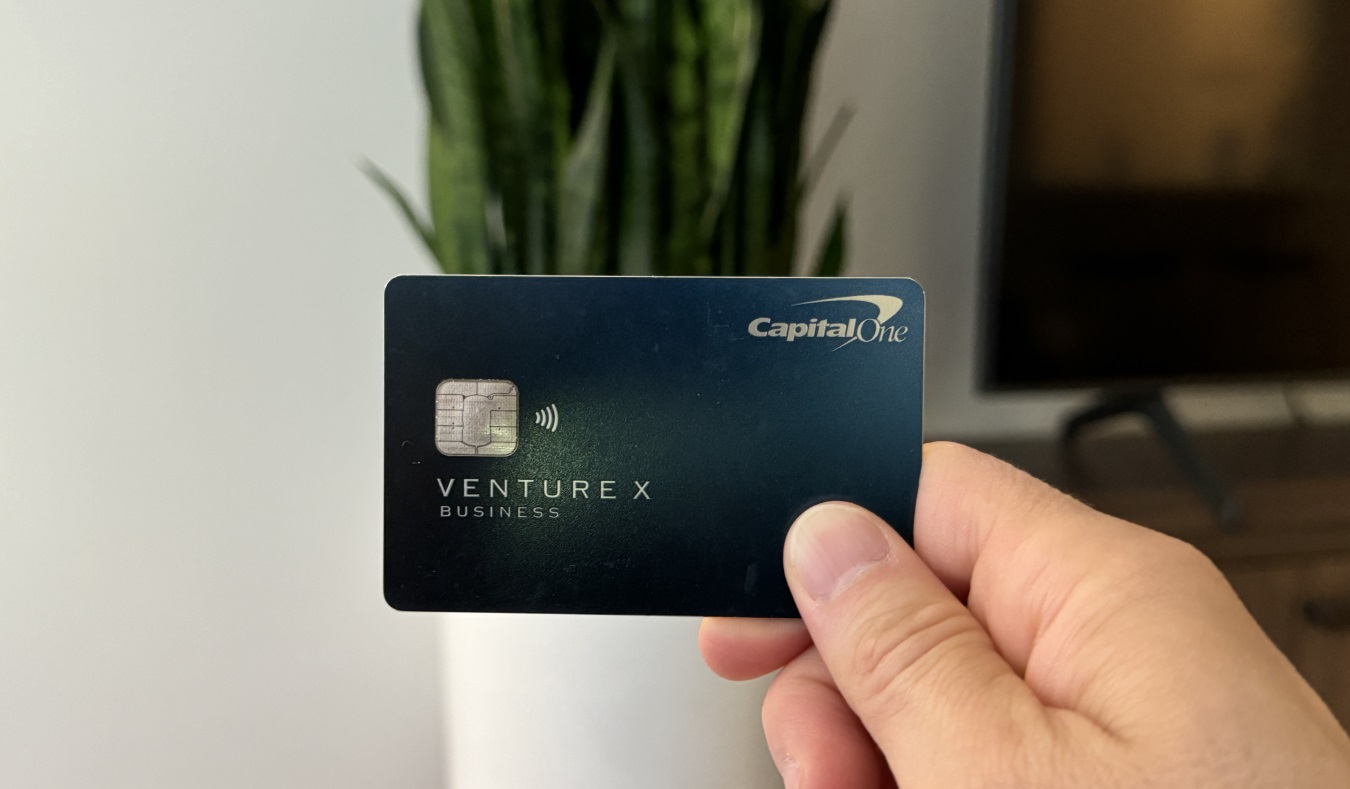
Not only do I have a bunch for my personal expenses but I have a couple for this business too. One of my favorite business credit cards is the Capital One Venture X Business Credit Card. It’s Capital One’s top-tier business product. I love it because there’s a big welcome offer, lounge access to over 1,300 airport lounges, annual travel credits, and a simple 2x reward on all spending (which ensures you are always earning multiples miles per dollar spent).
To help you decide if this card is for you, here’s my full review of the card and why I love it so much:
What is the Capital One Venture X Business Card?
The Capital One Venture X Business Credit Card is a travel rewards card issued by Capital One. It comes with a $395 annual fee that is way lower than the other premium business cards out there. And I think you can easily get way more value than the annual fee costs. Here’s a quick look at the main perks:
- LIMITED-TIME OFFER: Earn up to 400K bonus miles: 200K miles when you spend $30K in the first 3 months, and an additional 200k miles when you spend $150k in the first 6 months
- 2 miles per $1 on all purchases, no category restrictions
- 5× miles on flights booked through Capital One Travel
- 10× miles on hotels and rental cars booked through Capital One Travel
- $300 annual travel credit (through Capital One Business Travel)
- Every year, you’ll get 10,000 bonus miles after your account anniversary date.
- Enjoy access to 1,300+ airport lounges worldwide, including Capital One Lounge locations and Priority Pass
 lounges, after enrollment
 - Up to $120 statement credit for TSA Precheck or Global Entry
- No foreign transaction fees
Using Your Capital One Miles
Capital One miles can be redeemed in a few ways. One is by booking travel directly through Capital One’s portal. While I usually don’t recommend booking through credit card portals, to fully benefit from the Venture X’s travel credit (and to get the 5x and 10x miles offers) you’ll need to use their portal.
Another option is to use your miles to get reimbursed for any travel purchase. For 90 days after making such a purchase, you can reimburse yourself at a redemption rate of one cent per mile. After 90 days, and for all other purchases, you can use miles as cash back, at a redemption rate of 0.5 cents per mile (but avoid doing this, as it’s not a good value).
You can also use your Capital One miles in the Capital One Entertainment portal to book tickets for concerts, sports events, and more. Occasionally, Capital One offers cardholder-only events and presale opportunities too. While you’ll get just 0.8 cents per mile for tickets (not the best value), it’s still a fun and unique way to redeem miles.
However, you’ll get the most out of your miles by transferring them to Capital One’s 15+ airline and hotel partners. While the actual value varies based on what you book, you can usually find airline and hotel redemptions worth much more than the aforementioned one cent per mile. (The process is pretty straightforward and can be done through your Capital One account.)
Here are Capital One’s current travel partners:
- Accor Live Limitless
- Aeromexico Club Premier
- Air Canada Aeroplan
- Air France/KLM Flying Blue
- Avianca LifeMiles
- British Airways Executive Club
- Cathay Pacific Asia Miles
- Choice Privileges
- Emirates Skywards
- Etihad Airways Guest
- EVA Air Infinity MileageLands
- Finnair Plus
- I Prefer Hotel Rewards
- Japan Airlines Mileage Bank
- Qantas Frequent Flyer
- Qatar Airways Privilege Club
- Singapore Airlines KrisFlyer
- TAP Portugal Miles&Go
- Turkish Airlines Miles&Smiles
- Virgin Red
- Wyndham Rewards
Pros of the Venture X Business Card
As someone who travels constantly for work, I’m always looking for ways to earn miles faster and make airport life a little less painful. I like this card for the simple 2x miles on everything. I use a lot of other cards that can get you 3 or 4x on certain categories like advertising or non-portal travel spend like flights and hotels. But when it comes to dining, museums, transportation, etc, there’s not a lot of ways to get more than 2x per dollar spent on a business card. So, I use this Venture X for anything I can’t get more than 2x per dollar.
Here’s a deep dive into some of the main perks:
$300 Travel Credit
Each year, you get a $300 credit toward bookings made through Capital One Business Travel (flights, hotels, or car rentals). If you’re already booking travel regularly, this credit is basically free money — and it immediately drops your effective annual fee from $395 to $95.
The catch? You do have to book through Capital One’s travel portal. It’s powered by Hopper, so the interface is clean and prices are usually competitive. I’ve found some good deals there.
Lounge Access
You get access to Capital One Lounges and Priority Pass lounges. Capital One’s own lounges are actually great — spacious, modern, good food — though they’re still limited location. But they are expanding how many they have and I personally think they are way better than the other lounges competitor banks have. You also get Priority Pass access t o over 1,300 lounges globally, which is a common but really nice perk.
Anniversary Bonus
Every year on your account anniversary, you’ll get 10,000 bonus miles (worth about $100 toward travel). It’s a nice “thank you” that helps offset the annual fee even further.
Should You Get This Card?
The Capital One Venture X Business Credit Card is best for small- to medium-sized business owners who travel regularly and can put at least $30,000 to ensure they meet the welcome offer requirements.
Overall, I think the Capital One Venture X Business is one of the best-value premium business cards out there right now. It’s not as benefit-packed or as flashy as the The Business Platinum Card® from American Express or the Chase Sapphire Reserve for Business?, but it’s easier to use, has a less expensive annual fee, gets you lounge access, and an easy to understand earning structure.
It’s one of the cards I use the most often for my business. I highly recommend getting it.
Stop paying full price for travel!
Download my free guide to points and miles and learn how to use points and miles for free travel! It's how all the pros travel so much! In this guide, I'll show you:
- How to Pick a Credit Card
- How to Earn Up to 10x Miles on Your Spending
- How to Redeem Your Points
- And a Ton of Other Money Saving Tips!
Book Your Trip: Logistical Tips and Tricks
Book Your Flight
Find a cheap flight by using Skyscanner. It’s my favorite search engine because it searches websites and airlines around the globe so you always know no stone is being left unturned.
Book Your Accommodation
You can book your hostel with Hostelworld. If you want to stay somewhere other than a hostel, use Booking.com as it consistently returns the cheapest rates for guesthouses and hotels.
Don’t Forget Travel Insurance
Travel insurance will protect you against illness, injury, theft, and cancellations. It’s comprehensive protection in case anything goes wrong. I never go on a trip without it as I’ve had to use it many times in the past. My favorite companies that offer the best service and value are:
- SafetyWing (best for budget travelers)
- World Nomads (best for mid-range travelers)
- InsureMyTrip (for those 70 and over)
- Medjet (for additional evacuation coverage)
Want to Travel for Free?
Travel credit cards allow you to earn points that can be redeemed for free flights and accommodation — all without any extra spending. Check out my guide to picking the right card and my current favorites to get started and see the latest best deals.
Need a Rental Car?
Discover Cars is a budget-friendly international car rental website. No matter where you’re headed, they’ll be able to find the best — and cheapest — rental for your trip!
Need Help Finding Activities for Your Trip?
Get Your Guide is a huge online marketplace where you can find cool walking tours, fun excursions, skip-the-line tickets, private guides, and more.
Ready to Book Your Trip?
Check out my resource page for the best companies to use when you travel. I list all the ones I use when I travel. They are the best in class and you can’t go wrong using them on your trip.
The post Capital One Venture X Business Card Review: Is It Worth It? appeared first on Nomadic Matt's Travel Site.
]]>The post My Top Gifts for Travelers for the Holidays appeared first on Nomadic Matt's Travel Site.
]]>
Travelers can be a fickle group of people to buy gifts for. We’re constantly coming and going, we usually don’t carry a lot of stuff with us, and no two travelers are alike. Finding the perfect gift for the traveler in your life can be tricky.
While a plane ticket is never a bad idea (I’m a window seat in case anyone is thinking of getting me one), I’ve put together this ultimate gift guide for travelers as there’s a lot of great travel gear out there these days that helps people travel cheaper and better.
Even me, the gear-adverse traveler, likes a lot of this stuff!
This is stuff I actually think is super useful. No nonsense. No fluff. Just the best gifts for intrepid travelers and globetrotting nomads.
1. A Travel Lock
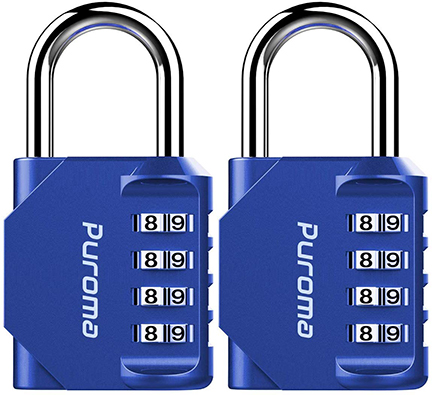 This simple item is one of the most important for the budget traveler. Since many hostels have lockers, backpackers need to have their own travel lock when they’re on the road. While you can usually rent them at hostels, those prices add up after a while. I never leave home without a lock because I know it will come in handy.
2. Loop Earplugs
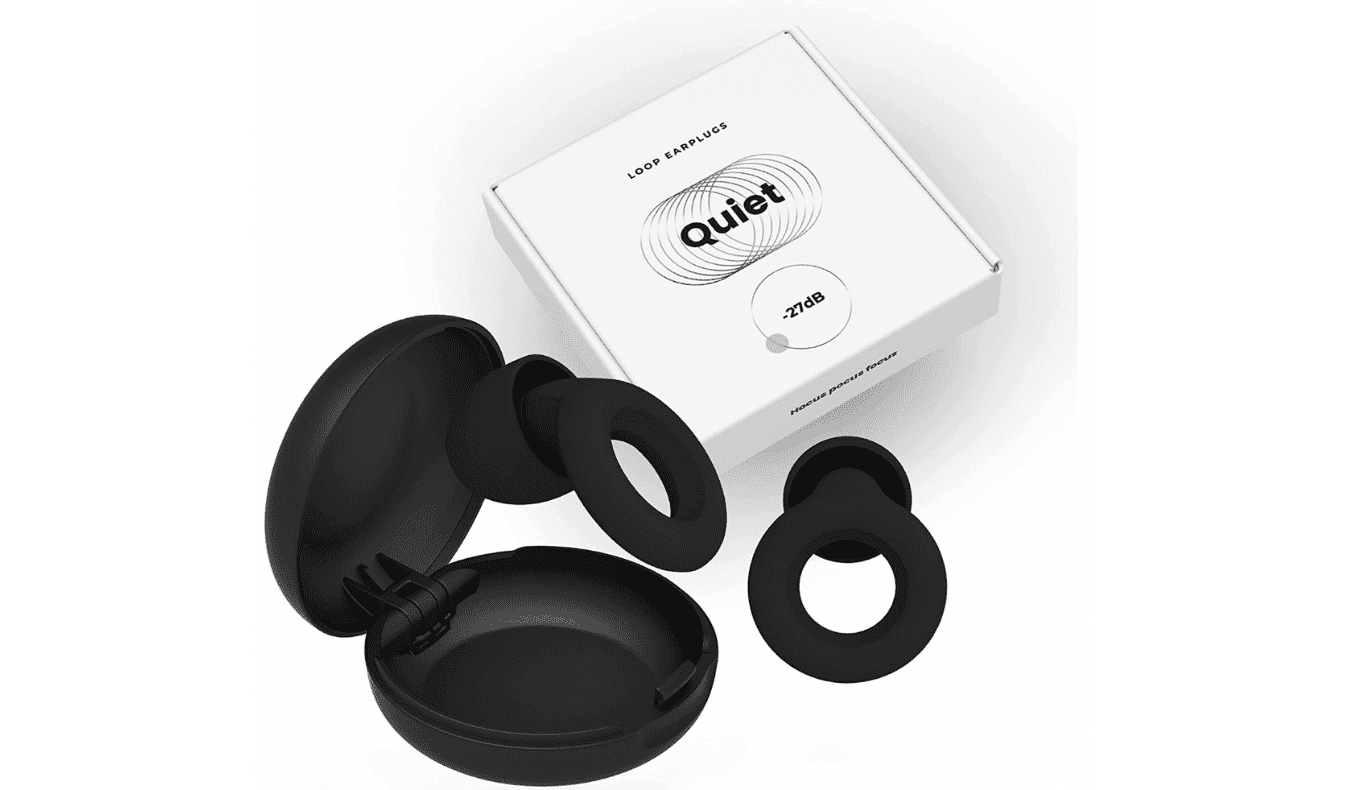 Anyone who has ever stayed in a hostel knows that a quality pair of earplugs is a necessity. From chronic snorers to late-night drinkers to copulating couples in creaking bunks, hostels are known for their less-than-quiet accommodation. I suggest investing in good earplugs and not just the cheap foam ones. Not only will they help you sleep, but they’re great for bus trips and flights as well as wearing as you explore louder, more hectic cities.
3. Travel Adapter
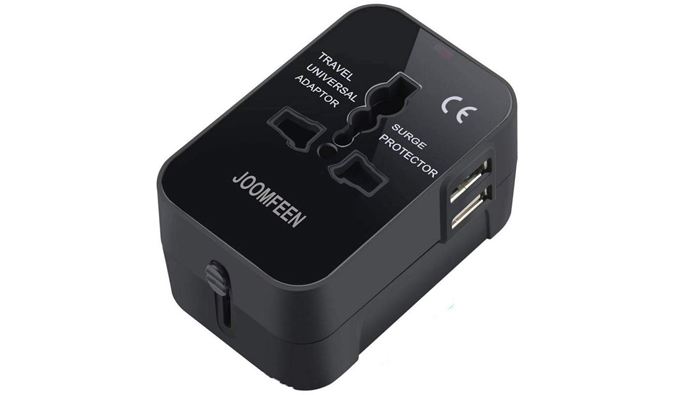 Nothing is more tedious than arriving at a new destination only to realize you can’t charge your devices because the electrical outlets are different. That’s why you’ll need a travel adapter. They’re a simple accessory. There’s a million out there but this is one I use as it covers every region of the world and comes with USB ports too. It’s cheap, easy to use, and lightweight. Everything you need in an adapter.
4. Zbiotics Pre-Alcohol
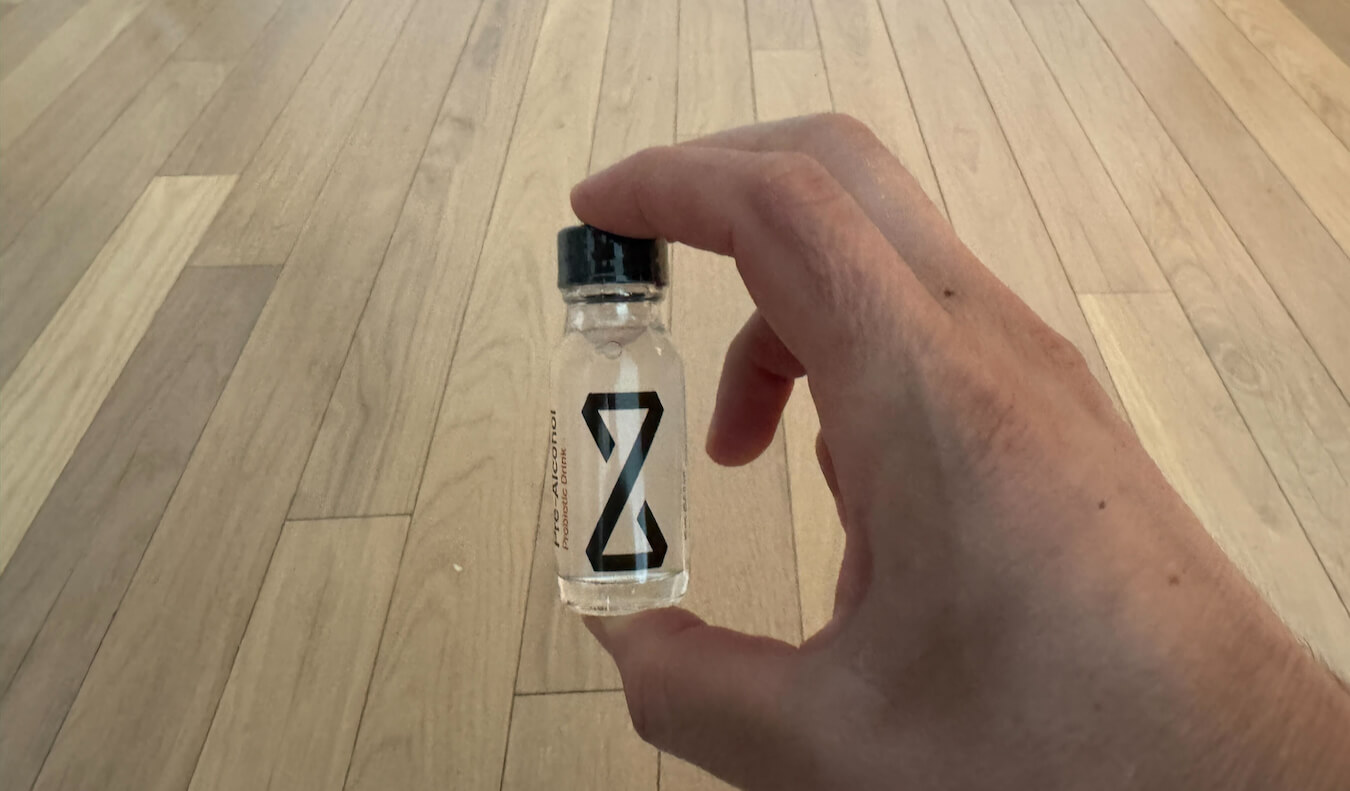
Zbiotics Pre-Alcohol is a pre-drink probiotic that helps you really avoid those rough mornings after drinking. A friend of mine introduced it into our friend group over a year ago and I’ve been hooked ever since. It really does work. I take it with me whenever I travel and have gotten other friends, fellow travel writers, and even a tour guide in Peru onto it. It will make your next mornings bright and it helps me ensure that I’m not feeling too bad to do stuff the next day. I love this product. It works. If you or a traveler on your gift list drinks, take it. You can save 10% off with the code NOMADICMATT.
5. Scratch Travel Maps from Landmass
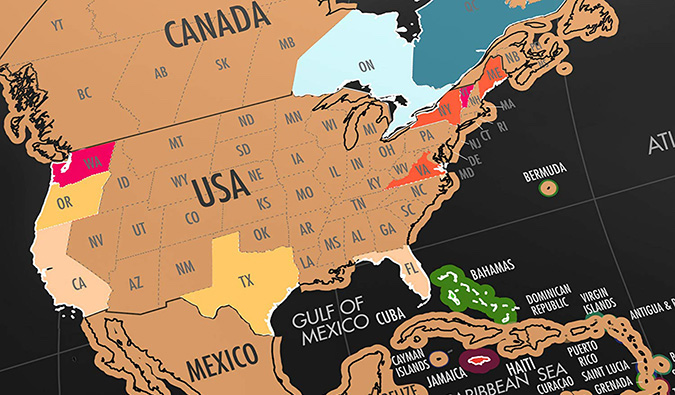 Scratch maps are a fun way to keep track of your past travels while helping you stay inspired as you plan your future trips. You simply scratch off the parts of the world you’ve been. Simple. Easy. Landmass is my favorite company that makes these, though there are plenty of other companies that make them now so you can find them in all sorts of sizes and colors.
6. Passport Holder
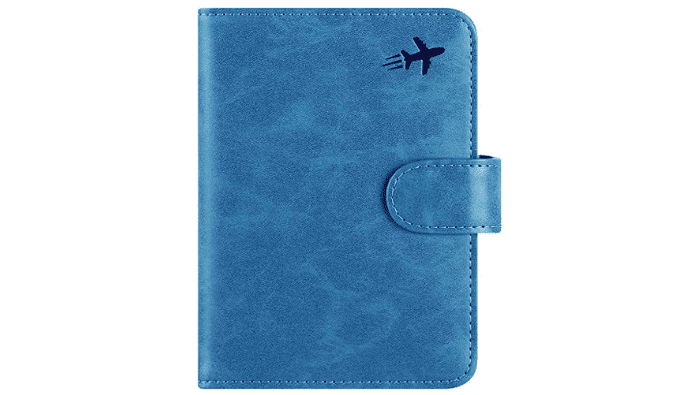 A passport holder is a must-have for any avid traveler. Not only does it protect your passport from wear and tear, it makes your travels much more convenient. Most passport holders have slots for your travel credit cards as well as any cash you have, making it a safe and convenient way to keep your valuables secure while you travel. While there are tons of expensive and fancy passport holders out there, a simple one will get the job done and save you money in the process (money you can spend on more travels!).
7. Hand-drawn Food Maps
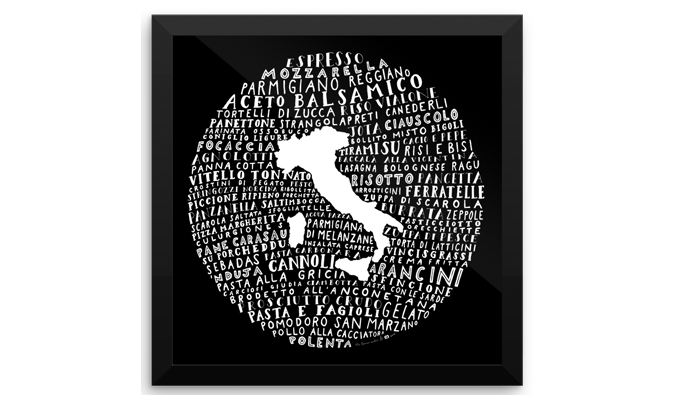 These are unique, hand-drawn typographic maps of food from Legal Nomads and artist Ella Frances Sanders. They make a thoughtful gift for anyone who loves to eat and travel (and who doesn’t!). They come in a variety of sizes too! Jodi’s maps are the best! (Use code NOMADICMATT to save 10%)
8. How to Travel the World on $75 A Day (and Other Travel Books!)
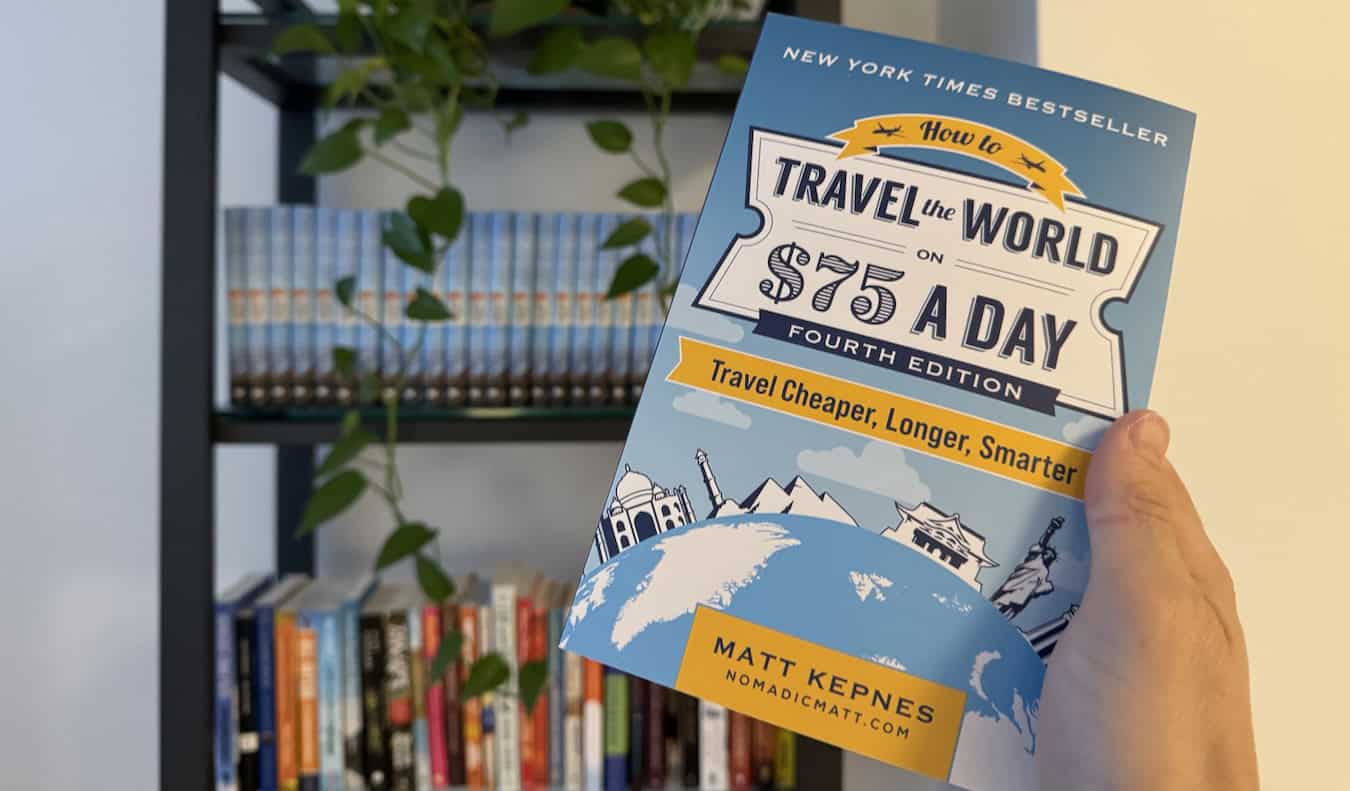 Want to travel more for less? Pick up a copy of my New York Times bestselling guide to budget travel and never overpay for travel again! With this book, you’ll get an easy-to-follow step-by-step guide to planning a trip on a budget. And, with super detailed sections to regions around the globe, you’ll be able to navigate every region around the world like a pro! This book takes all the knowledge from this website and puts it all into one place with even more details and resources! And it’s not just for long-term travelers either. The tactics and strategies you’ll learn apply to a trip of any length of time!
For more travel book suggestions, you can check out my list of recommended reading on Amazon and Bookshop (I have hundreds of book suggestions there!).
9. Celiac Travel Cards
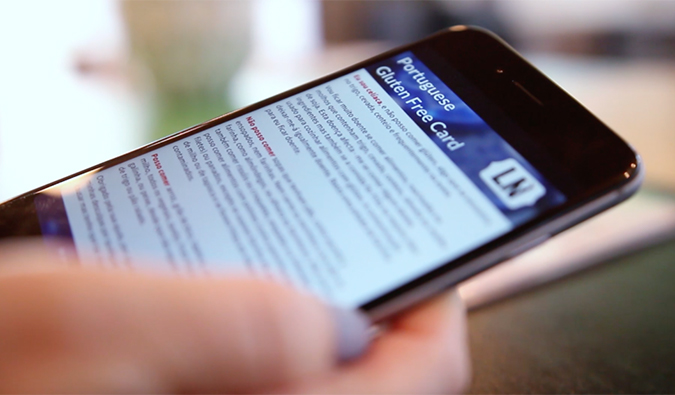 My friend Jodi from Legal Nomads created these helpful travel cards for anyone traveling with Celiac disease. They are in-depth resources that communicate your concerns to restaurant staff in a way that allows anyone traveling with the disease to have a worry-free meal. If you or someone you love has Celiac disease, these travel cards are a useful resource! (Use code NOMADICMATT for 10% off!)
10. Dry Shampoo
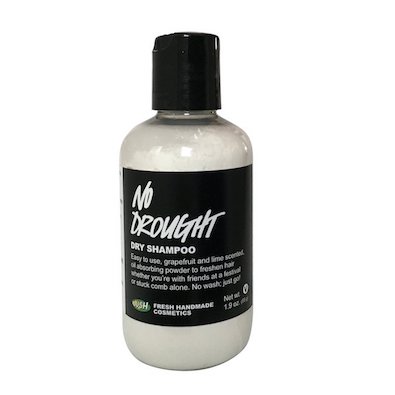
Dry shampoo is a convenient liquid-free alternative to regular shampoo. It’s a useful minimalist solution for budget travelers who travel carry-on only and an eco-friendly choice as well. Natural dry shampoos absorb the grease and oil in your hair, keeping it clean while you’re on the road — and with minimal effort too. It works for all types of hair and hair lengths as well so you don’t need to shave your head or do anything drastic either.
11. Packing Cubes
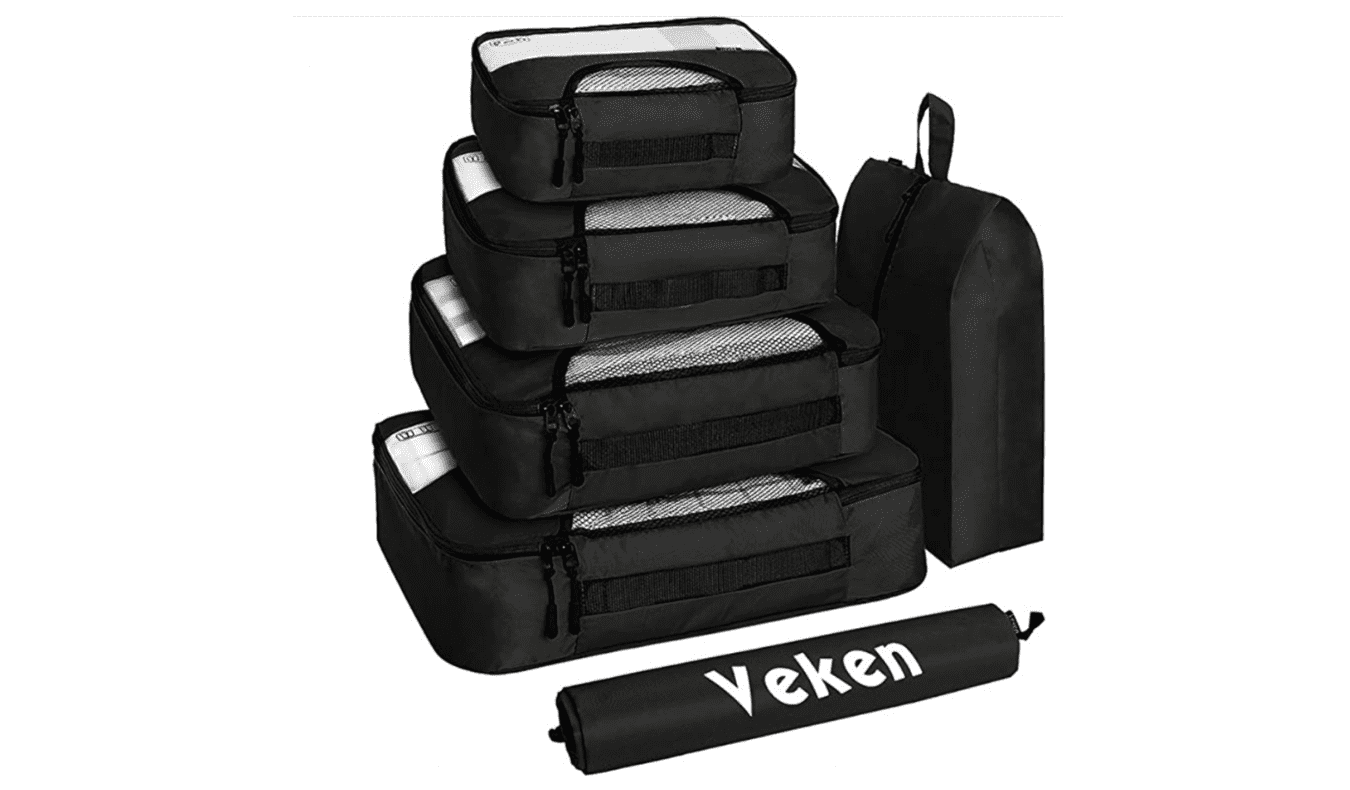 Packing cubes are an awesome tool to help you stay organized while you travel. Whether you’re a budget backpacker or traveling with half a dozen suitcases, packing cubes will keep you organized as you travel the world. They come in a variety of sizes, allowing you to store items big and small. If you know a traveler who needs a hand staying organized, this is the gift for them!
12. HostelPass
 For the traveler heading to Europe, consider gifting a HostelPass. This discount card offers over 130 discounts to hostels in 40 cities throughout 15 countries in Europe. With HostelPass, travelers can save up to 40% on accommodation. It’s the discount card I wish existed when I first started backpacking around Europe and it’s perfect for budget travelers planning a trip around the continent.
13. Trip Chaser

In this fun travel game, you have to prove who’s the most travel-savvy by buying, bartering, and gambling your way to various destinations. Just like actual travel, expect both stumbling blocks and enriching experiences along the way. You’ll rely on the luck of drawing a good event card, or proactively buying travel insurance to save you from the unexpected! It’s a family-friendly game for 2-6 players and perfect for everyone who loves to travel!
14. DryFox Quick Dry Travel Towel
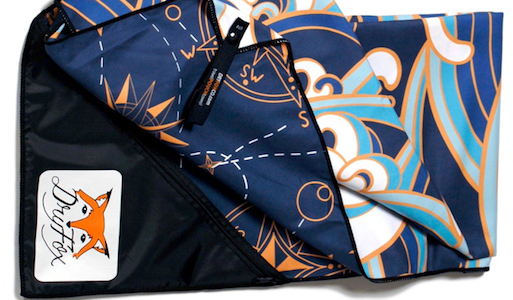 Unless you’re only staying at hotels or using Airbnb, you’re going to need to bring a towel when you travel. Having a lightweight, quick-drying towel makes a huge difference when you’re on the road since regular towels are too bulky and heavy (and they take a long time to dry). Get a travel towel for your next trip so you can travel light. They’re a compact, quick-drying solution that every backpacker needs.
(Use code “nomadicmatt” for 15% off your purchase!)
15. Menstrual Cup
 Menstrual cups are reusable, eco-friendly feminine hygiene products. While I can’t speak to their effectiveness personally, tons of female travelers I know are huge fans. It can be a hassle trying to find the products you need while abroad, making this a simple, effective, and affordable addition to your toiletry kit.
16. Trtl Travel Pillow
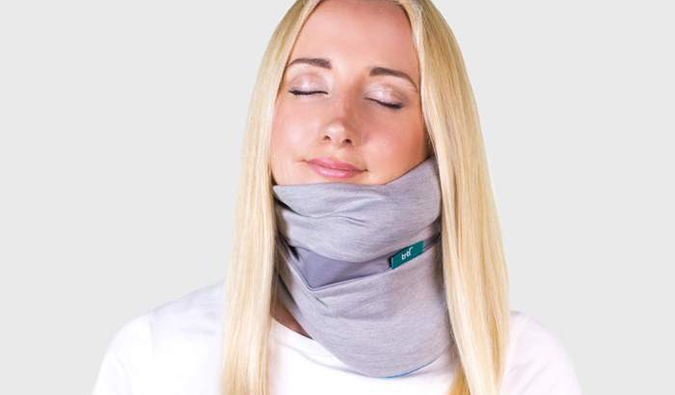 Travel pillows are perfect for those long-haul flights, delayed buses, and airport naps. Every traveler needs to have a travel pillow on hand to maximize that downtime and time in transit, and Trtl pillows are the best on the market. They help prevent jet lag and make even the longest, most uncomfortable trip a little more bearable.
17. Travel Headlamp
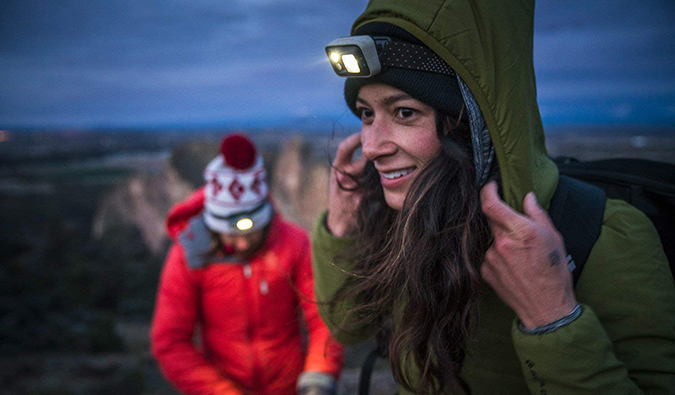 This is a handy tool for both backpackers and anyone looking to do any hiking or camping. In a hostel, a headlamp is helpful if you need to check in or out but don’t want to disturb your fellow travelers. For outdoorsy folks, they’re useful for hiking, setting up camp in the dark, and for emergencies.
18. External Battery
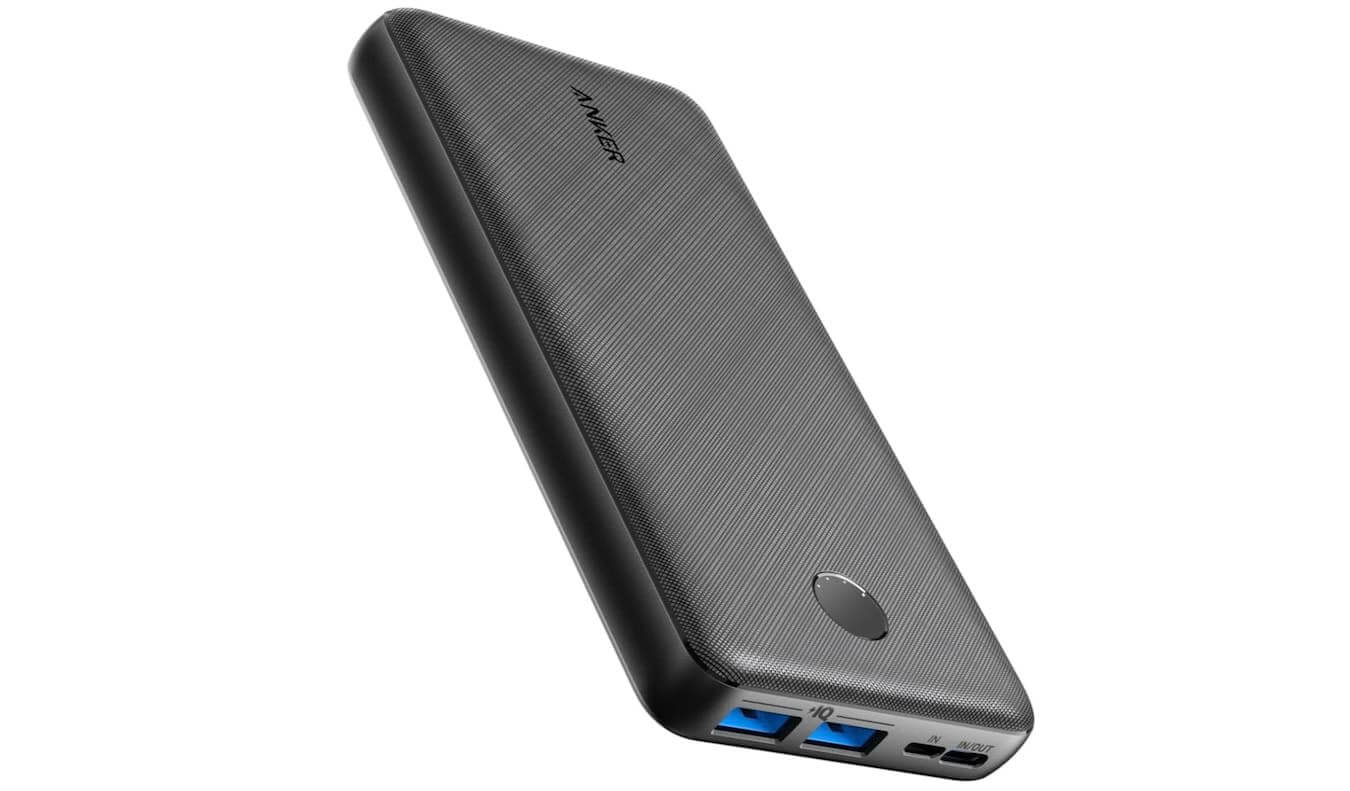 These days, we all travel with numerous electronic devices like phones and tablets. It can be hard to keep them all charged. An external battery solves that problem. Two high-output USB ports make this external battery incredibly convenient, and it can charge most phones up to 6 times in one go!
19. LifeStraw
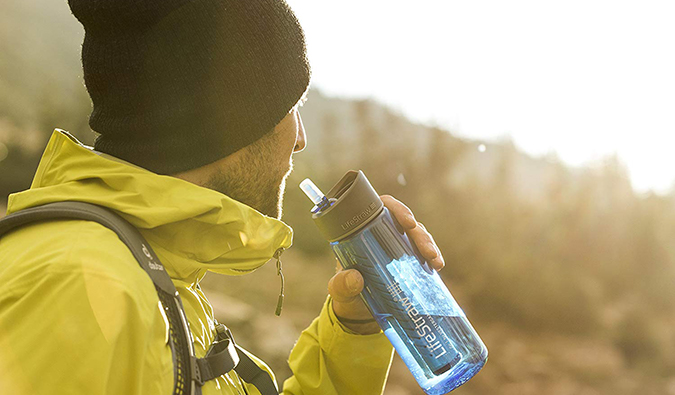 Environmentally, pollution from single-use plastics is something every traveler has witnessed. And, monetarily, when you’re traveling, continuously buying water gets expensive. Do your part to help the planet by traveling with a reusable filter. LifeStraw is an awesome brand with a built-in water filter. The filters last 5 years so you save money on changing them too.
20. Travel Backpack
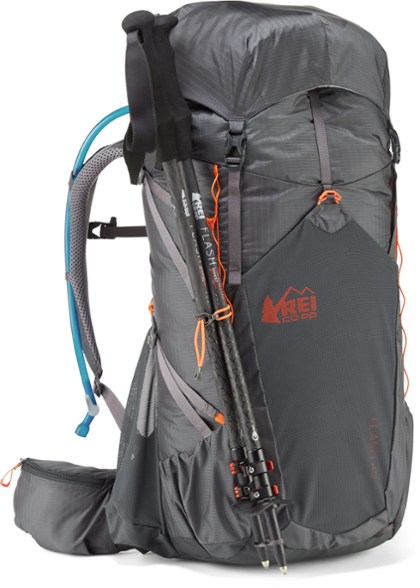 If you’ve got a budget traveler on your holiday list, a travel backpack is the gift that keeps on giving. A well-made bag will last for years and through dozens of adventures. Having a reliable travel backpack is one of the most important items for a traveler.
My favorite bag is the Flash 55 from REI but other companies that make high-quality bags include Osprey, Nomatic, and MEC (for Canadians).
For a smaller day bag, check out the Flash 22. Or if you prefer a bag with wheels, check out the Farpoint 36.
For more backpack suggestions, check out my ultimate guide finding the right backpack for more options!
21. Travel Clothing from Unbound Merino
 These travel clothes are some of the most versatile on the market. Made from merino wool, Unbound offers clothing that can be worn daily for weeks (and months!) without getting smelly. They are perfect for the traveler who wants to pack lighter. I really love the material, they’re comfortable, they hardly ever need a wash, and they last forever!
22. MacBook Air
 This is my favorite travel computer. It’s light, it’s powerful enough for regular use, and the battery life lasts a long time. While an iPad might be another potential travel choice, I find the Air much more versatile — especially with their new M4 chip. You can just do a lot more with it. When I’m on the road, this is the laptop I travel with.
For a non-Apple phone with an equally awesome camera, check out the Google Pixel. It has an excellent camera!
23. Noise-Canceling Headphones
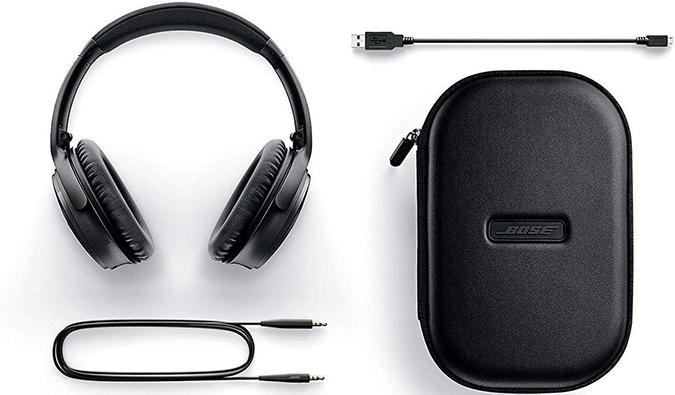 These are ideal for those long flights or bus trips as they block out background noise so you can read, work, or sleep without being disturbed. The wireless Bose QuietComfort 45 headphones are fan favorites and my go-to brand. They are comfortable, rechargeable, and do an amazing job at removing background noise. If you’re on a budget, consider the QuietComfort 25 instead.
24. Kindle
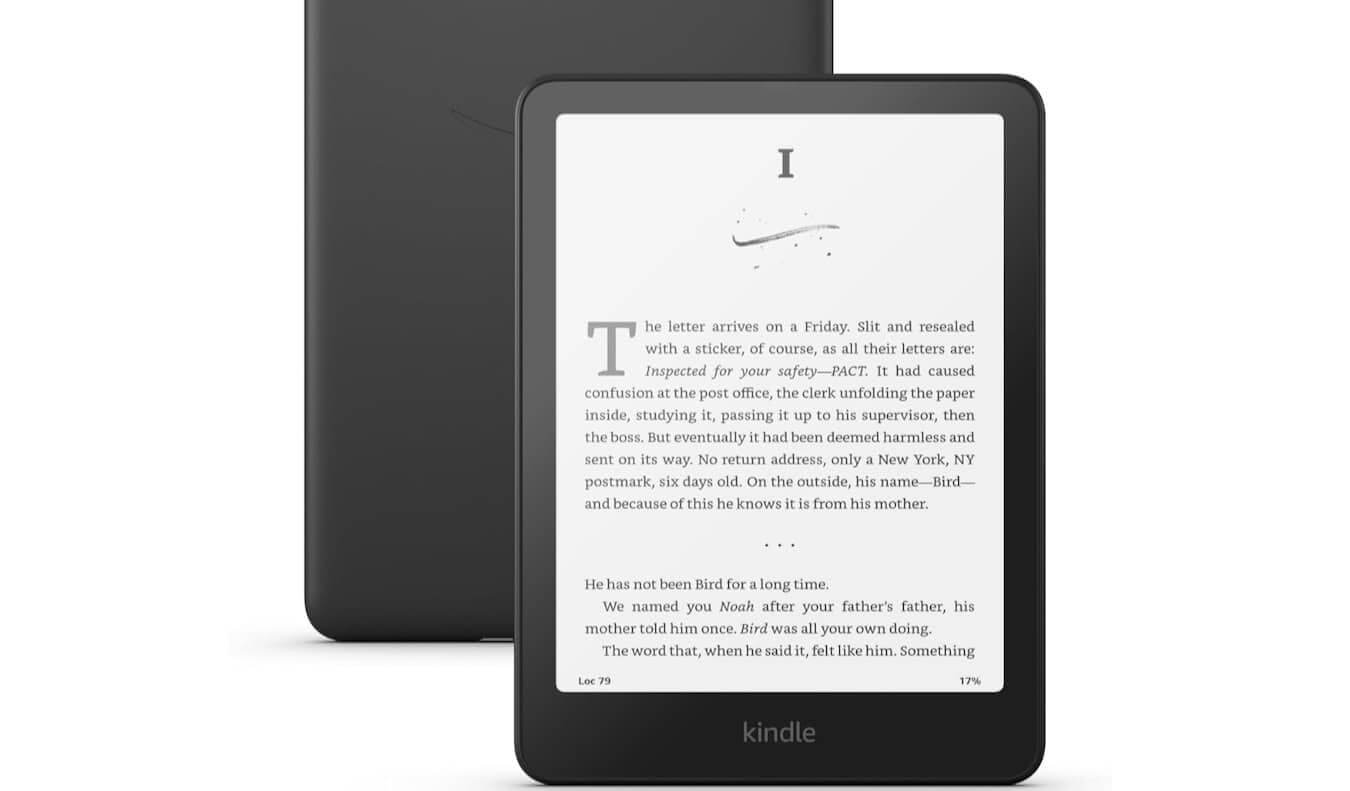 While I personally prefer to read physical books, I can’t argue against the convenience and simplicity of the Kindle. Hauling around physical books is a pain if you’re traveling often. With a Kindle, you can pack over 1,000 books into a single device and many versions can also use apps and access the internet. It’s a wonderful gift for the avid reader.
25. GoPro Hero 12
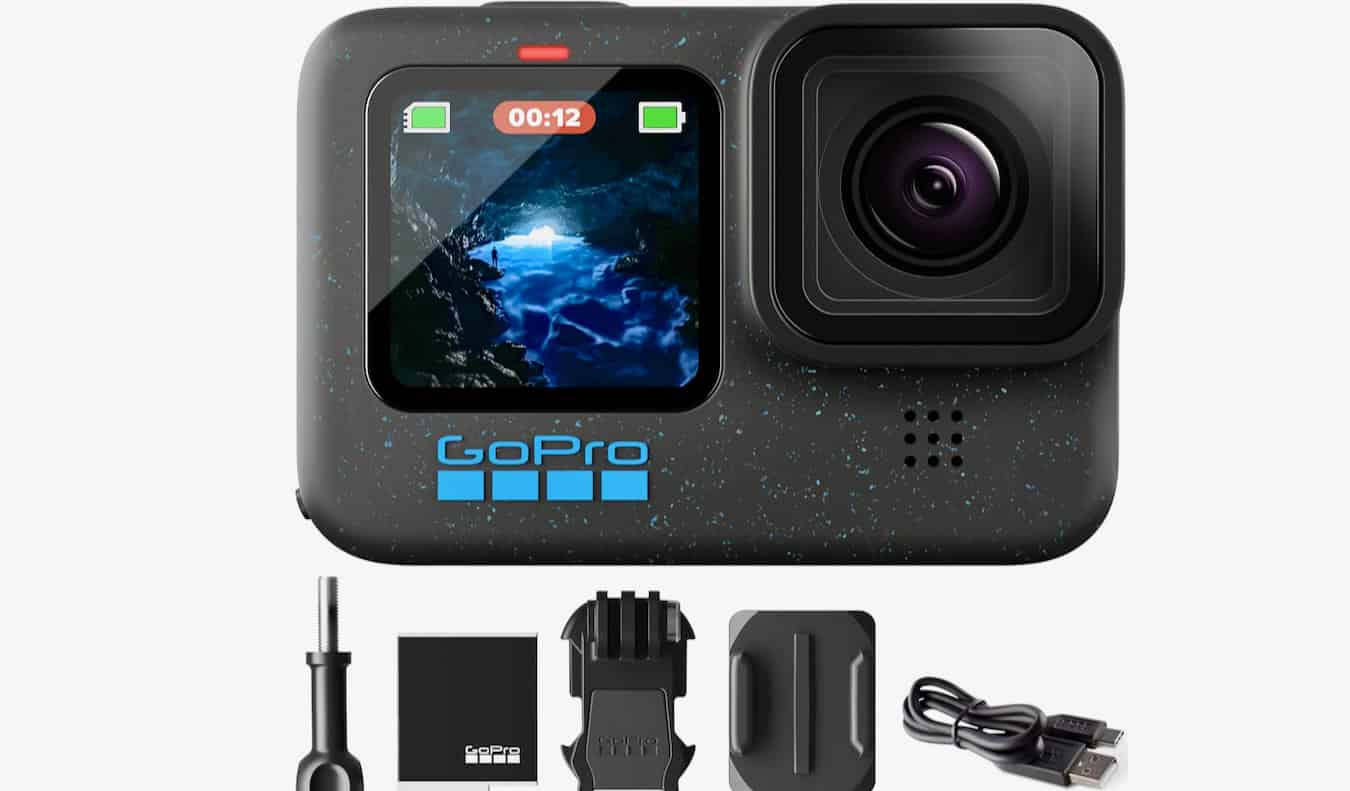 Every traveler needs a camera, and few are as versatile and durable as the GoPro. They’re incredible for photos and video no matter the climate. They’re waterproof and are perfect for both everyday city exploring as well as more extreme and adventurous activities. They’re just awesome. If the Hero 12 is too pricey, grab the 10 or 11. They’re almost as good and a bit cheaper!
Book Your Trip: Logistical Tips and Tricks
Book Your Flight
Find a cheap flight by using Skyscanner. It’s my favorite search engine because it searches websites and airlines around the globe so you always know no stone is being left unturned.
Book Your Accommodation
You can book your hostel with Hostelworld. If you want to stay somewhere other than a hostel, use Booking.com as it consistently returns the cheapest rates for guesthouses and hotels.
Don’t Forget Travel Insurance
Travel insurance will protect you against illness, injury, theft, and cancellations. It’s comprehensive protection in case anything goes wrong. I never go on a trip without it as I’ve had to use it many times in the past. My favorite companies that offer the best service and value are:
- SafetyWing (best for budget travelers)
- World Nomads (best for mid-range travelers)
- InsureMyTrip (for those 70 and over)
- Medjet (for additional evacuation coverage)
Want to Travel for Free?
Travel credit cards allow you to earn points that can be redeemed for free flights and accommodation — all without any extra spending. Check out my guide to picking the right card and my current favorites to get started and see the latest best deals.
Need a Rental Car?
Discover Cars is a budget-friendly international car rental website. No matter where you’re headed, they’ll be able to find the best — and cheapest — rental for your trip!
Need Help Finding Activities for Your Trip?
Get Your Guide is a huge online marketplace where you can find cool walking tours, fun excursions, skip-the-line tickets, private guides, and more.
Ready to Book Your Trip?
Check out my resource page for the best companies to use when you travel. I list all the ones I use when I travel. They are the best in class and you can’t go wrong using them on your trip.
The post My Top Gifts for Travelers for the Holidays appeared first on Nomadic Matt's Travel Site.
]]>The post Holafly eSIMs: A Better Way to Stay Connected When You Travel appeared first on Nomadic Matt's Travel Site.
]]>
When you’re traveling, staying connected is essential. Whether you’re figuring out the best route to your hostel, finding a place to eat, or translating a train schedule or menu, having reliable data makes life on the road infinitely easier. I still remember my early days of travel carrying a physical guidebook around as I wandered the streets looking for my accommodation.
Or, when smartphones became widespread, searching for a SIM card kiosk to buy a physical SIM, trying to poorly communicate with staff in a language I didn’t know, and spending 20 minutes swapping out tiny plastic chips.
Luckily, things have changed and life is incredibly easier thanks to eSIMs. Rather than needing a physical SIM card, you can download an app that gives you tons of high-speed data. In a world where we need to be connected for so many reasons (for example, everything in China is paid through an app, so you need data), eSIMs are great.
One company that’s become a major player in this space is Holafly. (Use the code MATTK to get a 5% discount.) They offer unlimited data, quick setup, and global coverage without the hassle of finding a physical SIM card.
In a world of seemingly never ending eSIM companies, they are one of the best. In this blog post, I will tell you why!
Who is Holafly?
Holafly is a Spanish-founded company that started back in 2017 and is now based in Dublin. They offer eSIMs that you can install on your phone via QR code. Once activated, they let you connect to the internet abroad using local carrier networks. What sets Holafly apart from a lot of other providers is that over 200 of their options come with unlimited data and are priced by days rather than gigabytes. You can personalize the days from 1 up to 90 days in over 200 destinations. Holafly’s coverage is also pretty extensive. They offer service in over 200 destinations, which includes most of Europe, Asia, North America, and Latin America.
How to Set Up Holafly
The process of setting up Holafly is incredibly straightforward. Here is how to do it:
Check your phone first – Make sure your device is unlocked and supports eSIM (most recent iPhones and many newer Androids do). Have a Wi-Fi connection handy for setup.
Save the email & QR – Keep the QR code and order info somewhere safe.
Install the eSIM – While on Wi-Fi, open the confirmation email and scan the QR code from your phone camera or tap the activation link. There are three options:
- Scan the QR Code
- Manual Installation
- One-Button Install for iOS 17.4 or above
On iPhone: Settings -> Cellular (or Mobile Data) -> Add Cellular Plan -> scan the QR.
On Android: Settings -> Network & internet (or Connections) -> SIMs or Mobile network -> Add eSIM / Add mobile plan -> scan the QR. (Exact labels vary by phone.)
On arrival, enable data roaming for the eSIM – Go to Cellular/Mobile Data settings, select the Holafly line and turn on Data Roaming and Mobile Data for that line. (Turn off Mobile Data for your home SIM to avoid accidental roaming charges.)
Holafly partners with local carriers, so your connection depends on whichever network is strongest in that region. Note that Holafly’s eSIMs are data-only. You can keep your home SIM card in your phone for texts or calls, while Holafly handles all your data. Apps like WhatsApp, iMessage, and Telegram will still work with your regular number, so you can message friends and family just like you would at home.
The “unlimited data” promise is what draws most people in, and for good reason. Most eSIM companies sell data in small bundles, which adds up quickly, especially if you’re using maps, social media, or video calls. With Holafly, you just pay for the number of days you need and get unlimited data during that time.
Plans start at around $4 USD per day, though they are cheaper if you get more days or choose their new subscription options Holafly Plans.
Plus, Holafly offers 24/7 customer support multilingual, hotspot capabilities, 15+ regional eSIMs, a global eSIM, no hidden costs, and an incredible 6 month flexible refund policy.
I think it’s one of the best eSIM options for travelers who want reliability and ease of use. It’s especially great for people visiting multiple countries or anyone who relies heavily on mobile data — bloggers, remote workers, or digital nomads. The connection has been consistent, speeds are good, and the ability to set everything up before I even leave home is a huge time-saver
At the end of the day, that’s really what makes Holafly appealing: simplicity. You don’t have to think about data, SIM cards, or network compatibility. You just scan, activate, and go. For travelers like me, that convenience is priceless.
Use the code MATTK to get a 5% discount on any eSIM for your next adventure!
Terms and Conditions:
- For Website or App
- 5% on eSIMs and 10% off on Holafly Plans for the first 12 months
- No minimum purchase requirement
- All customers
- No usage limits
- Can’t combine with other discounts (except Holafly Plans annual subscription 22%)
- Active from now, no end date
How to Travel the World on $75 a Day
My New York Times best-selling book to travel will teach you how to master the art of travel so that you’ll get off save money, always find deals, and have a deeper travel experience. It’s your A to Z planning guide that the BBC called the “bible for budget travelers.”
Book Your Trip: Logistical Tips and Tricks
Book Your Flight
Find a cheap flight by using Skyscanner. It’s my favorite search engine because it searches websites and airlines around the globe so you always know no stone is being left unturned.
Book Your Accommodation
You can book your hostel with Hostelworld. If you want to stay somewhere other than a hostel, use Booking.com as it consistently returns the cheapest rates for guesthouses and hotels.
Don’t Forget Travel Insurance
Travel insurance will protect you against illness, injury, theft, and cancellations. It’s comprehensive protection in case anything goes wrong. I never go on a trip without it as I’ve had to use it many times in the past. My favorite companies that offer the best service and value are:
- SafetyWing (best for budget travelers)
- World Nomads (best for mid-range travelers)
- InsureMyTrip (for those 70 and over)
- Medjet (for additional evacuation coverage)
Want to Travel for Free?
Travel credit cards allow you to earn points that can be redeemed for free flights and accommodation — all without any extra spending. Check out my guide to picking the right card and my current favorites to get started and see the latest best deals.
Need a Rental Car?
Discover Cars is a budget-friendly international car rental website. No matter where you’re headed, they’ll be able to find the best — and cheapest — rental for your trip!
Need Help Finding Activities for Your Trip?
Get Your Guide is a huge online marketplace where you can find cool walking tours, fun excursions, skip-the-line tickets, private guides, and more.
Ready to Book Your Trip?
Check out my resource page for the best companies to use when you travel. I list all the ones I use when I travel. They are the best in class and you can’t go wrong using them on your trip.
The post Holafly eSIMs: A Better Way to Stay Connected When You Travel appeared first on Nomadic Matt's Travel Site.
]]>The post 7 Common Travel Myths That are WRONG appeared first on Nomadic Matt's Travel Site.
]]>
Years ago, the website Earth Porm reposted my article “The Ultimate Guide to Traveling When You’re Broke.” As I went through the comments on the post, I was dismayed by the mean and dismissive comments people shared as well their misconceptions about travel.
These comments made me realize that, despite all the detailed websites and books on how to make travel affordable and accessible, too many people still believe the notion that travel is expensive, unsafe, and impossible unless you are rich.
Too many say, “I can’t. It’s impossible” and become cynical about travel. The notion that travel is expensive couldn’t be further from the truth (I wrote an entire book proving that very point.)
Yet people still have all kinds of misconceptions about budget travel and staying safe abroad.
So, today, I want to debunk 7 of the most common travel myths I’ve encountered over the years:
Myth #1: Travel is Expensive

Everything costs some money — and that includes travel. But the idea that travel is only about fancy tours, beach-side resorts, and luxurious villas is outdated. Traditionally, subtle marketing language made everyone believe that “a fun vacation is an expensive vacation.” After decades of being bombarded by those insidious ad campaigns, our collective consciousness still equates travel with luxury. Heck, I used to believe this too.
But the fact of the matter is you don’t need a trust fund or a high-paying job to have an amazing trip.
You’ll need to learn how to plan a trip.
But you don’t need to be rich to travel. You just need to be creative and have the right priorities.
And it can even be done on minimum wage. Sure, it may take longer to save for your trip, and you may need to make sacrifices, but if you want to travel — whether for two weeks or two years — you can find a way to make it happen. Here are some starting points that can help you lower your costs and travel on a budget:
- How to Use the Sharing Economy
- 61 Travel Tips to Make You the World’s Savviest Traveler
- How to Find Cheap Flights
- How to Change the “I’m Too Poor to Travel” Mindset
- How to Find Cheap Accommodation
Myth #2: Travel Credit Cards Will Ruin Your Credit
Collecting points and miles is the art of using travel credit cards to gain free travel by using your regular spending. No extra purchases. No jumping through loopholes. Just earning free travel by putting your date nights, groceries, gas, and other regular expenses on a travel card.
I can’t count the number of free flights and hotel stays I’ve had over the years. By collecting points and miles, I’ve been able to travel for a fraction of the price it would have cost otherwise, opening up tons of possibilities for budget travel.
While applying for credit cards will cause a temporary dip in your credit score, that dip gets corrected within two months if you keep paying off your bills. Unless you’re looking to make a huge purchase (like buying a house) in the near future, that minor dip will not affect you. Over time, having more available credit will actually improve your credit score. And I mean what’s the point of building up a credit score if you don’t use it? You work to build a good credit score for the purpose of doing things with it.
I have over a dozen credit cards (though I only actively use three) and a credit score of 797 out of 850. As long as you pay your card off each month, you don’t need to worry.
Here are some resources to help you get started:
- How I Earn 1 Million Frequent Flier Miles Each Year
- A Beginner’s Guide to Points & Miles
- How to Pick the Right Credit Card
- The Ultimate Guide to Points & Miles
Myth #3: Couchsurfing is Unsafe

Couchsurfing is a sharing economy app that facilitates cultural exchange. Locals offer a free space in their home (sometimes just a couch) which travelers can use to then visit the city and learn about about the destination.
While staying in a stranger’s house might not be for everyone, it’s nevertheless a safe and fun way to travel (not to mention an affordable one). Much like Airbnb, Couchsurfing hosts have reviews and profiles you can read to make sure you’re staying with someone you feel you’d get along with. It’s really not much different than Airbnb (except it’s free!).
Of course, if you’re not ready to stay with a stranger you can also use to app to meet people for activities instead, such as a meal, coffee, or a museum visit. It’s a great way to benefit from the app without having to stay with someone.
As long as you use common sense, read reviews, and trust your gut, you’ll be able to use the app safely while saving money and having fun. There are families who host people, solo female hosts who only host women, as well as expats looking to connect with fellow foreigners.
Couchsurfing and websites like it have vibrant communities. Because, contrary to what the news and media like to report, not everyone out there is a secret murderer looking for their next victim. Most people are good, kind people just looking to make friends and learn new things. Don’t let fear limit your opportunities.
Myth #4: Hitchhiking Will Get You Killed

Hitchhiking is a relatively common way to travel in many countries around the world. It was also a common (and safe) way to travel the US and Canada for a long while too.
The idea that hitchhiking is dangerous dates back to the 1950s when the FBI led a scare campaign to get people to stop the practice, in part because civil rights activists were hitchhiking to rallies. The FBI’s campaign permanently embedded in the mind of people that hitchhiking is dangerous by claiming that most hitchhikers were murderers.
Combined with a narrative pushed by the media that the world is unsafe, hitchhiking continues to be perceived as a dangerous activity — even if it’s not.
My friend hitchhiked solo around the US.
Kristin from Be My Travel Muse hitchhiked around China
I’ve hitchhiked in Europe, the Caribbean, and Central America and met wonderful, interesting people in the process.
Hitchhiking, like Couchsurfing, is about using common sense. Make a note of license plates, have a phone in case of an emergency, and travel with a friend if you’re not comfortable going solo. And remember, you don’t have to get into any car that stops. Use your judgment and follow your instincts and you’ll be able to meet lots of interesting people while still staying safe.
Myth #5: Travel is Dangerous for Women

While both men and women face risks on the road, women often encounter additional hazards that require caution and awareness. But that doesn’t mean women need to stay home or only go to super-safe destinations.
The “if it bleeds, it leads” approach to reporting over the years has highlighted only the negative stories of female travelers. This style of reporting bolsters the perceptions that the world is so scary that solo female travel is very, very unsafe and should be avoided.
Fortunately, that’s not true at all. You have a higher chance of getting hit by a bus than you do of ending up like in the movie Taken.
But don’t just take my word for it. Here’s an excerpt from a post on women’s safety:
If I look back on the times when people have told me “Don’t go there!” or “You might die!” it’s mostly advice from people who have never been to those places and have never done any research on them. The press is hugely influential. I can’t tell you how many times I’ve read international press coverage that is flat-out wrong. You need to find trustworthy sources and advice from people who know what they’re talking about. I once mentioned to my parents that I had plans to go to Rwanda. My concerned father told me, “You’re not going.” He was obviously worried about Rwanda’s tumultuous past. Had he done his research, he would have known that Rwanda is the safest country in East Africa. Once he researched it, I never heard another word about it. The crime rates in your backyard can be just as bad as the destination you’re headed to, if not worse.
These days, there are tons of powerful, independent female creators traveling to all corners of the world — including off-the-beaten-path countries. Heck, many of them are more adventurous than I am! Here are some to follow for inspiration:
Myth 6: Budget Travel is Only Possible if You are Young and Single
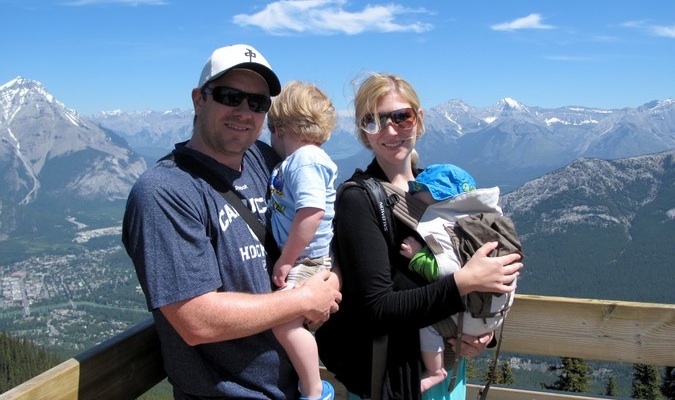
Too many people believe travel is something you can do only if you’re young or single. That couldn’t be further from the truth. I understand that when you are older, you may want more luxury than a budget backpacker. And I know that family travel requires more planning than solo travel. B
ut travel is not solely the purview of the young.
At the end of the day, age doesn’t matter. I’ve seen families and seniors backpacking around the world, staying in hostels, or driving RVs.
You don’t need to be limited by age or your relationship status. Here are some articles that prove both families and seniors can travel on a budget:
- Why Don and Allison Gave Up a Normal Retirement
- This 72-Year-Old is Backpacking the World
- How a Family of 4 Traveled the World on $130 a Day
- How Amanda Educates Her Kids from the Road
Myth #7: You Can’t Work Overseas.

We often think of working abroad as an challenging process not worth the effort. It’s something that requires interviews, visas, and a polished résumé. But, for the kind of jobs that you’ll get as a traveler, that’s not true.
If you want to work and are flexible about what you’re willing to do, you can find employment almost anywhere. You can get a working holiday in countries like Australia or New Zealand, become an au pair, teach English, or even volunteer in exchange for room and board.
Sure, you might not get a fancy or well-paying job. But if your priority is travel then what does that matter?
Farms, schools, bars, restaurants, cafes, and the tourism industry are almost always looking for staff — especially in areas with a seasonal influx of tourists. You won’t get rich, but you will get to see the world. If you want to learn more about your options, here are some blog posts to get you started:
- 15 Ways to Work Overseas
- The 9 Best Places to Teach English Overseas
- How to Travel and Work Around the World with WWOOF
These travel myths come from years of being indoctrinated with the belief that travel has to be expensive and the world is scary.
That couldn’t be further from the truth.
With a little research, you’ll discover that traveling the world is much safer — and much more affordable — than most people think.
How to Travel the World on $75 a Day
My New York Times best-selling book to travel will teach you how to master the art of travel so that you’ll get off save money, always find deals, and have a deeper travel experience. It’s your A to Z planning guide that the BBC called the “bible for budget travelers.”
Book Your Trip: Logistical Tips and Tricks
Book Your Flight
Find a cheap flight by using Skyscanner. It’s my favorite search engine because it searches websites and airlines around the globe so you always know no stone is being left unturned.
Book Your Accommodation
You can book your hostel with Hostelworld. If you want to stay somewhere other than a hostel, use Booking.com as it consistently returns the cheapest rates for guesthouses and hotels.
Don’t Forget Travel Insurance
Travel insurance will protect you against illness, injury, theft, and cancellations. It’s comprehensive protection in case anything goes wrong. I never go on a trip without it as I’ve had to use it many times in the past. My favorite companies that offer the best service and value are:
- SafetyWing (best for budget travelers)
- World Nomads (best for mid-range travelers)
- InsureMyTrip (for those 70 and over)
- Medjet (for additional evacuation coverage)
Want to Travel for Free?
Travel credit cards allow you to earn points that can be redeemed for free flights and accommodation — all without any extra spending. Check out my guide to picking the right card and my current favorites to get started and see the latest best deals.
Need a Rental Car?
Discover Cars is a budget-friendly international car rental website. No matter where you’re headed, they’ll be able to find the best — and cheapest — rental for your trip!
Need Help Finding Activities for Your Trip?
Get Your Guide is a huge online marketplace where you can find cool walking tours, fun excursions, skip-the-line tickets, private guides, and more.
Ready to Book Your Trip?
Check out my resource page for the best companies to use when you travel. I list all the ones I use when I travel. They are the best in class and you can’t go wrong using them on your trip.
The post 7 Common Travel Myths That are WRONG appeared first on Nomadic Matt's Travel Site.
]]>The post How to Find the Perfect Apartment for Vacation Rentals appeared first on Nomadic Matt's Travel Site.
]]>
I used to hate renting apartments from websites like Airbnb or VRBO. As a solo traveler, I preferred the social atmosphere of hostels. You met people, hostels ran activities and they were where you were “supposed to stay” as a backpacker.
When I did want something other than a hostel, I used a hospitality network liked Couchsurfing or simply stayed with friends.
But, after close to two decades as a nomad, there are times when I like my privacy and the ability to “create a home.” I like to cook, want to relax on a couch, and just chill.
While apartment rentals often contribute to overtourism (discussed more below), there are still plenty of real hosts out there who are renting places they live in.
Below is a detailed guide about how they work, how to pick the perfect apartment, and how not to contribute to overtourism / make locals upset!
How Do Apartment Rentals Work?

Apartment rental sites allow locals to rent out an individual room, shared space, or entire home/apartment. The host lists their place online, posts photos, writes a description, hits publish, and, presto, they can start to make extra money with the unused space.
The booking process is like booking any other type of accommodation online. You search the database, find a place you like, create an account, and request a booking. When the owner accepts, you are sent a confirmation.
Apartment rentals represent the space between hostels and hotels. If you are traveling on business and want the comforts of home, you probably aren’t going to stay in a hostel. But hotels may be too expensive or too impersonal for you. A rented apartment is a perfect compromise.
Traveling with friends or a big group? This is definitely the option for you. Squeezing a bunch of people into a rental home/apartment will be much cheaper per person than a room in a hostel or hotel. Plus, you get space to spread out and relax. Dorm rooms and cramped hotels don’t give you a lot of “me” time.
If you don’t want a full apartment but are looking to save money, Airbnb has a new feature called “Rooms” which lets you search for listings in people’s homes or guest houses. It’s like how Airbnb used to be — people renting out extra rooms or guest houses for added cash. You always get your own room and, sometimes, a private entrance. You’ll also get to interact with your host, who can provide lots of insider tips and insight to your destination.
I’ve used Rooms a lot in the last couple of years — in LA, Rome, Paris, Nice — and, to me, as a solo traveler, it’s a much better way to travel. I highly recommend doing this as a way to combat the negative effects of these platforms (more on that below). Additionally, as hostels have gotten a lot more expensive over the years, Rooms are often cheaper than hostels! You get to stay and meet with a local and save money! Win-win!
How to Pick the Right Apartment

Unfortunately, as accommodation rentals have exploded into the mainstream, it’s become harder and harder to find great hosts. A lot of hosts now own multiple properties and live elsewhere. That means you often deal with property managers and never get to interact with the actual owner. Additionally, a lot of apartments aren’t quite as nice in reality as they appear in the photos. In order to find suitable accommodation, I use the following criteria when looking for a place to stay on these platforms:
- Do they have positive reviews? – If other people stayed there, had a good time, and found the apartment as advertised, you probably will too.
- Do they have multiple listings? – This is important because many people use these sites to be property managers. They buy a bunch of apartments and then re-rent them on Airbnb. I try to avoid these places because they cause a lot of problems for the local rental market and lack the personal touch that comes when hosts rent out their own apartments.
- Do they have accurate photos? – Any listing that doesn’t include a lot of (quality) photos is probably hiding something (or at the very least misrepresenting the accommodation).
- Are they an active user or Superhost? – Active users are good users, so see when they last logged on. If it’s been a while, your query might go unanswered.
- Is their calendar updated? – While listings only show up in a search if they are available, hosts don’t always update their calendar. If someone hasn’t updated their calendar in 30 days, I tend to skip it. There’s nothing worse than going to book a place, only for them to cancel and say, “Whoops, sorry, it’s not available!”
- Are they verified? – Verified accounts are less likely to be people of suspicious quality, as the listing site has at least found some background information on them.
- Have they been someone else’s guest before? – If they were someone’s guest and that went well, it’s likely that they will be reliable.
These rules are helpful guidelines, but at the end of the day, you have to go with your gut. I don’t need a listing to meet every point. I once had a host who hit only a couple of these points and she turned out to be my favorite host! And sometimes, in places without many hosts, you might have to be a little loose with this list.
But the more points a place meets, the comfortable I feel renting.
How to Avoid Overtourism
Over the years, Airbnb and other apartment rental websites have dramatically raised the price of rents and pushed out the locals you want to interact with as people have started to buy multiple properties in order to rent them out to tourists. It’s a big problem.
In many places, like Lisbon and Venice, most locals can’t afford the price of rent anymore. And it’s not just cities. Rural areas are now becoming affected too.
There have been strong protests against Airbnb (and similar sites) in Barcelona. Throughout Europe you often see “Airbnb go home!” graffiti. Japan cracked down on Airbnb. NYC has strict laws against it now too. Residents in Mexico City have protested. Every day brings a new story about the pushback against these websites.
Given local pushback and the issues with over tourism and the housing market, I strongly encourage you to only use Airbnb or similar services if you are renting a room in someone’s house, especially in large cities in Europe. As I mentioned above, Airbnb has a new feature called “Rooms” which allows you to easily search for rooms in people’s houses where they actually live. They are verified listings and a much better way to use the platform. It’s like how Airbnb used to be before it grew so big — people renting out extra rooms or guest houses for added cash. I highly recommend it.
However, if you can’t, try as hard as you can to make sure that the place you are renting is either a licensed B&B (if it’s only used for tourists) or someone’s house that they actually live in. This way you won’t add to any local housing issues!
Help end overtourism. You have the power. Don’t displace the people you want to visit!
A Note on Safety
These sites run on trust. All these companies try to verify both buyer and seller to ensure no one ends up robbing anyone else, but you sometimes hear reports of sex parties, robberies, or creepy hosts.
However, apartment rental companies do provide a window that allows you to get your money back if you get a place that’s not as advertised. Just call their 24-hour hotline and they will set you up somewhere else (you can also reach out on social media to get the conversation started). They also hold your money in escrow so that if the place isn’t as advertised, you’ll get your money back. You never hand it over directly to the host.
All types of accommodations have risks (cleaners can steal from hotel rooms, dorm mates can take clothes from hostels, Couchsurfing hosts can get creepy), which is why these rules are important. I don’t think apartment rentals are any less safe than your other options, and the benefits greatly outweigh the perceived danger.
The Best Sites to Find a Rental Apartment
I think these are three best sites for finding an apartment:
Another option for long-term travelers is house sitting and pet sitting. In exchange for looking after someone’s property or pet while they travel, you get access to free accommodation. It’s a great option for slow/long-term travelers looking to stay in one location for longer periods of time. Check out this post to learn more about it!
Apartment rentals, when done right, are safe, affordable, and help you have a more authentic experience. Use the tips above and try one on your next trip. You’ll save money, get away from the tourists, and have a better trip!
How to Travel the World on $75 a Day
My New York Times best-selling book to travel will teach you how to master the art of travel so that you’ll get off save money, always find deals, and have a deeper travel experience. It’s your A to Z planning guide that the BBC called the “bible for budget travelers.”
Book Your Trip: Logistical Tips and Tricks
Book Your Flight
Find a cheap flight by using Skyscanner. It’s my favorite search engine because it searches websites and airlines around the globe so you always know no stone is being left unturned.
Book Your Accommodation
You can book your hostel with Hostelworld. If you want to stay somewhere other than a hostel, use Booking.com as it consistently returns the cheapest rates for guesthouses and hotels.
Don’t Forget Travel Insurance
Travel insurance will protect you against illness, injury, theft, and cancellations. It’s comprehensive protection in case anything goes wrong. I never go on a trip without it as I’ve had to use it many times in the past. My favorite companies that offer the best service and value are:
- SafetyWing (best for budget travelers)
- World Nomads (best for mid-range travelers)
- InsureMyTrip (for those 70 and over)
- Medjet (for additional evacuation coverage)
Want to Travel for Free?
Travel credit cards allow you to earn points that can be redeemed for free flights and accommodation — all without any extra spending. Check out my guide to picking the right card and my current favorites to get started and see the latest best deals.
Need a Rental Car?
Discover Cars is a budget-friendly international car rental website. No matter where you’re headed, they’ll be able to find the best — and cheapest — rental for your trip!
Need Help Finding Activities for Your Trip?
Get Your Guide is a huge online marketplace where you can find cool walking tours, fun excursions, skip-the-line tickets, private guides, and more.
Ready to Book Your Trip?
Check out my resource page for the best companies to use when you travel. I list all the ones I use when I travel. They are the best in class and you can’t go wrong using them on your trip.
The post How to Find the Perfect Apartment for Vacation Rentals appeared first on Nomadic Matt's Travel Site.
]]>The post How to Find a Cheap Car Rental appeared first on Nomadic Matt's Travel Site.
]]>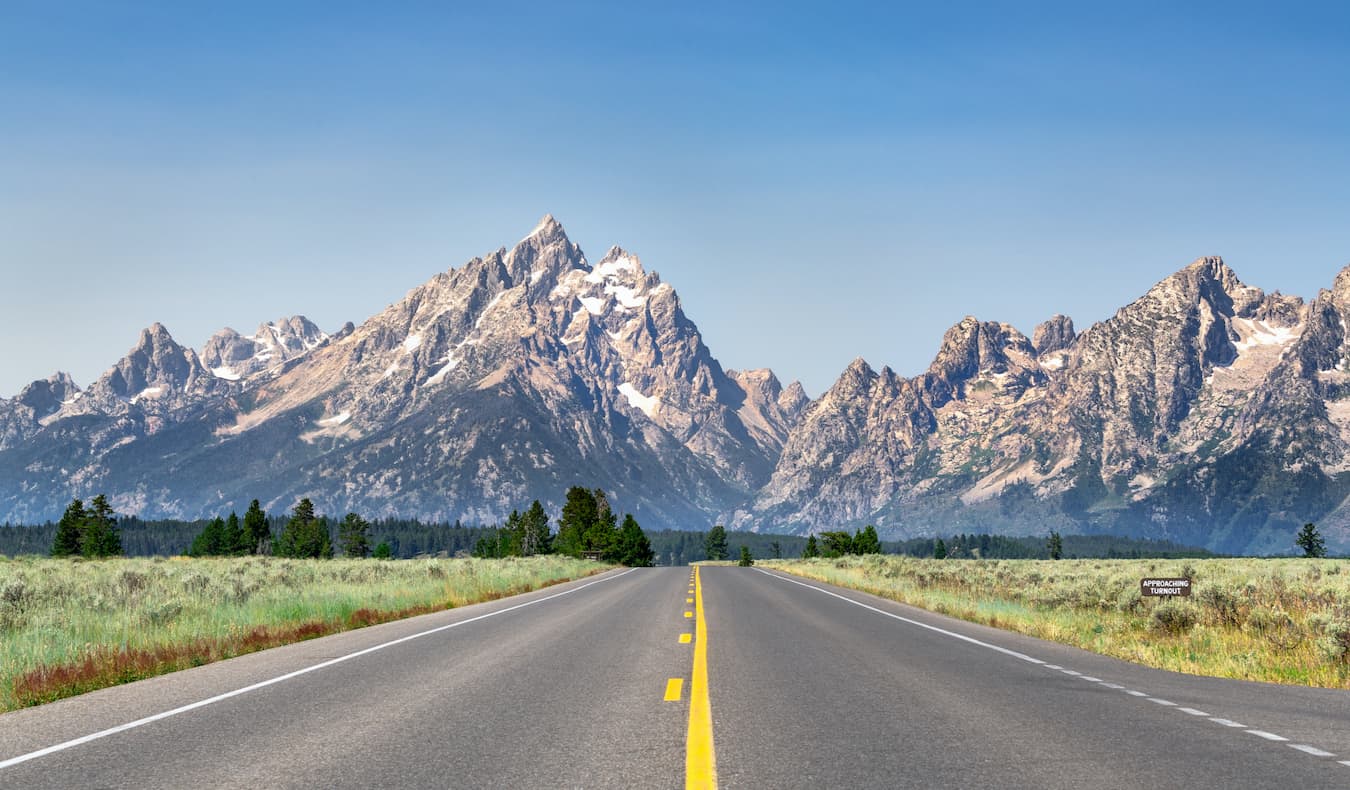
I love road trips. You get in car and can just head off anywhere you want. There’s a freedom to a road trip that you can’t get with trains (and, don’t get me wrong, I love train travel too). Small towns, beautiful parks, historic buildings….whatever you see, you can stop for and can stay as little or as long as you’d like!
Over the years, I’ve been on dozens of road trips. Some destinations are just meant for them (think New Zealand, Ireland, Iceland, the United States, South Africa, etc, etc.).
However, when you don’t have your own car, renting one can be a pain in the ass. No one likes doing it and we all (rightly) worry we’re getting ripped off. There’s always a lot of questions that go with renting a car.
Where can I find the best deals?
How do I know this cheap car rental site is legit?
What are things I should watch out for?
And what about insurance? Do I really need that? Or is my credit card’s insurance good enough?
In this post, I am going to share my tips and advice to help you find a cheap (but reliable) car rental and how to avoid common pitfalls that many travelers make.
Step 1: Join Rental Company Mailing Lists & Loyalty Programs
Most rental car companies advertise deals to their subscribers first. As soon as you know that you’re going on a road trip, join the mailing lists of the major car rental company. That way, you can snag any deals on offer as soon as they are announced.
To find the main rental car companies in your destination, simply visit the website of the airport you’re arriving at and see what car rental companies are available there.
Additionally, like airlines, many car rental companies have loyalty airlines that offer perks like discounts, bonus upgrades, and free rentals. Enterprise, Avis, Alamo, and Hertz are some of the major players on the market that offer free loyalty programs. Sign up for them so you don’t miss out on any perks, offers, or upgrades.
Step 2: Search for a Car with Discover Cars
While you can certainly check each car rental company individually for a deal, the best way to compare prices is to use an aggregator. These websites compile information from every car rental website so you don’t have to spend time manually comparing prices before you book.
Discover Cars is the best car search aggregator to use as it pulls more cars from more websites to ensure you find the best deal (it searches over 500 websites for deals). It cover 165 countries and 50,000+ locations worldwide!
You can use the widget below to check prices and get a quote quickly and easily to compare rental car deals with DiscoverCars comparison tool for cheap rentals:
Be sure to compare weekly and daily rates as well. For example, if you need a car for 4 days, compare the price for a 7-day trip as well. Sometimes it’s cheaper to rent for a whole week and just return the vehicle early.
Step 3: Check for Discounts & Deals
Some car rental websites share discounts directly on their website. For example, b oth Budget and Avis have “last minute deals” sections on their website where you can find incredible discounts as long as you’re flexible with your dates and destination.
Most major car rental companies also offer discounts and deals to certain groups as well. For example, Avis offers up to 35% off to AARP members (AARP is an interest group in the U.S. for people 50 and over) while Budget offers up to 35% off to veterans. Check and see if there are any discounts or deals you qualify for before you book, such as corporate discounts, government discounts, senior discounts, or discounts that stem from any hotel or airline programs you are a part of.
Many travel credit cards also have perks or discounts for car rentals.
Step 4: Check the Sharing Economy
Now that you’ve found the best deal, it’s time to do a quick comparison with sharing economy websites like Turo. Turo is like Airbnb but for cars. Locals list their vehicle and a price per day and you can browse the options and book a vehicle. It’s not available everywhere (they’re currently only in the United States, Australia, France, the United Kingdom, and Canada) but you can find it in most major cities. Depending on your needs and the duration of your trip, you might be able to find a cheaper deal.
Renters need to be at least 21 years old, have a valid driver’s license, and have proof of a good auto insurance score. You can either pick up the car, have it dropped off, or meet the owner somewhere to get the keys.
Prices can be as low as $25 USD per day, making it an affordable option if you book early.
And, if you’re looking for an RV, check out RVShare, which is similar to Turo but focused solely on RVs and campervans. They have the largest inventory out there.
There’s also the website Imoova.com, where you relocate people’s vehicles for them. You’ll be on a deadline as vehicles need to be delivered by a certain date, however, rates are usually just $1 per day — and many include some money for gas too.
Step 5: Book Your Car (and Book Early!)
Book early. Like booking flights, the closer you are to the date, the more expensive the car will be — assuming there are any left to rent! The recent pandemic saw car rental prices skyrocket as people shifted from trips abroad to road trips at home. The best time to rent a car is when you know you need to rent a car! Don’t wait.
You can click here to get a quote directly from DiscoverCars aggregator for global rental comparisons.
9 Questions to Ask Yourself Before You Rent a Car
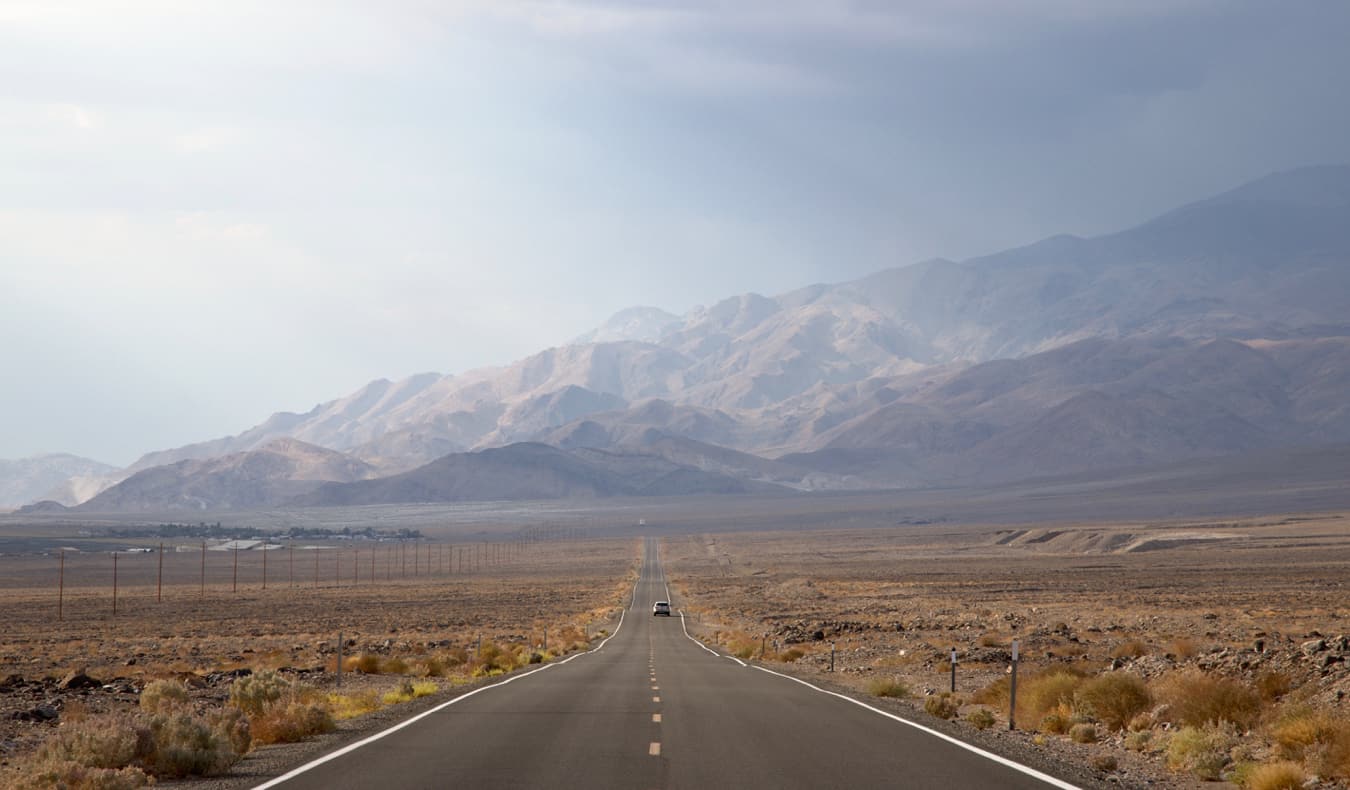
Now that you’ve found a cheap car rental, here are some considerations to keep in mind before you book your rental:
1. Are there driver requirements? – Some countries charge extra if a driver is under 25 years of age. Others require a certain amount of driving experience before one can rent a car (usually one year). Each country has different requirements, so make sure you read the fine print before you book. You can learn more about getting an international driver’s license on this blog post.
2. What does your travel insurance policy require? – Car companies always push you to get extra insurance when you rent a car. But should you? That depends on whether you have your own travel insurance with collision coverage, your own car insurance, or coverage through your travel credit card.
Some travel insurance companies and credit cards want you to decline the insurance from the rental agency, while others insist you get it and make a claim with them first. Before you rent a car, make sure you understand what is required by your existing travel insurance plan. The credit cards listed here have really good car insurance coverage.
3. What is not included? – Once you find a rental car, companies usually try to sell you all kinds of extras. GPS, liability insurance, satellite radio, a children’s car seat — these are just some of the extras not included in most rental cars. Find out what is and isn’t included, so you aren’t surprised when picking up your vehicle.
4. Do you need to fill the tank at the end? – Some rental car companies allow you to drop off the car as is but that is really rare. Most insist you fill up the tank beforehand. If you don’t, they charge you a highly inflated fee for the gas when they fill it up. I always just fill the tank back up before I drop the car back off.
5. How can you avoid getting scammed? – Before you head out on your trip, take pictures and videos of the car. Specifically, the bumper, windshield, and tires as these are the most likely areas to get damaged. That way, when you return it, they can’t blame you for any pre-existing damage. I always walk through with the person handing me the car and do a walk through with someone when I drop it off.
6. Do you have unlimited mileage? – Unlimited mileage is slowly becoming standard. However, it’s not always the default, check that you have unlimited mileage for longer road trips. Otherwise, you’ll be counting miles so you don’t get billed extra.
7. Do they charge for an extra driver? – If you’re going on a road trip with friends or family, chances are you’ll be sharing the driving. Unless you’re going with a spouse or domestic partner (which some companies include as an additional driver for free), that means you need to pay a fee for an extra driver, usually $10-20 USD per day! Limit your extra drivers if that’s the case, otherwise you’ll be charged a fortune. Also, keep in mind that it’s illegal to charge fees for extra drivers in some places (such as California).
8. Where is the pickup/drop-off location? – Most travelers pick up their rental cars at the airport. While convenient, airports charge companies fees for operating there — fees that get passed onto the customer. It’s worth checking around to see if there’s a difference in price for off-airport locations. If they are easy to reach, chances are you can find a cheaper price there.
9. Is the car automatic or manual transmission? – If you’re from the US or Canada and are used to driving an automatic vehicle, you might be surprised when renting a car abroad, as manual transmissions are standard in most other parts of the world. Because of this, renting an automatic-transmission car is usually more expensive. Double-check that you’re renting a vehicle that you can actually drive (don’t take chances trying to teach yourself on a rental car).
Road trips are one of the best ways to explore a new destination and the freedom of having a car is unrivaled, allowing you to get off the beaten path and into all kinds of adventures. And knowing a few things before you rent a car can save you a lot of time, hassle, and expensive pricing.
How to Travel the World on $75 a Day
My New York Times best-selling book to travel will teach you how to master the art of travel so that you’ll get off save money, always find deals, and have a deeper travel experience. It’s your A to Z planning guide that the BBC called the “bible for budget travelers.”
Book Your Trip: Logistical Tips and Tricks
Book Your Flight
Find a cheap flight by using Skyscanner. It’s my favorite search engine because it searches websites and airlines around the globe so you always know no stone is being left unturned.
Book Your Accommodation
You can book your hostel with Hostelworld. If you want to stay somewhere other than a hostel, use Booking.com as it consistently returns the cheapest rates for guesthouses and hotels.
Don’t Forget Travel Insurance
Travel insurance will protect you against illness, injury, theft, and cancellations. It’s comprehensive protection in case anything goes wrong. I never go on a trip without it as I’ve had to use it many times in the past. My favorite companies that offer the best service and value are:
- SafetyWing (best for budget travelers)
- World Nomads (best for mid-range travelers)
- InsureMyTrip (for those 70 and over)
- Medjet (for additional evacuation coverage)
Want to Travel for Free?
Travel credit cards allow you to earn points that can be redeemed for free flights and accommodation — all without any extra spending. Check out my guide to picking the right card and my current favorites to get started and see the latest best deals.
Need a Rental Car?
Discover Cars is a budget-friendly international car rental website. No matter where you’re headed, they’ll be able to find the best — and cheapest — rental for your trip!
Need Help Finding Activities for Your Trip?
Get Your Guide is a huge online marketplace where you can find cool walking tours, fun excursions, skip-the-line tickets, private guides, and more.
Ready to Book Your Trip?
Check out my resource page for the best companies to use when you travel. I list all the ones I use when I travel. They are the best in class and you can’t go wrong using them on your trip.
The post How to Find a Cheap Car Rental appeared first on Nomadic Matt's Travel Site.
]]>The post The Best Airbnb Experiences in New York City appeared first on Nomadic Matt's Travel Site.
]]>
There’s a lot of tours in New York City (I’ve highlighted my favorites here) but I think one thing people don’t do enough of is Airbnb experience. Most of us know Airbnb through their stay features but they also have a lot of experiences where you can get a local to show you around. I actually like these experiences more than traditional tours because they have locals who share something they are passionate about, they are small groups, and they are usually a bit more off the beaten path.
I don’t think people take these tours enough and they are always one of my favorite things to look for whenever I travel anywhere in the world. New York City has a ton of options you can choose from. Here are my favorites:
Explore Brooklyn’s Pizza Scene
Pizza and NYC go hand in hand like bread and butter and this Brooklyn pizza tour run by travel writer Dani Hienrich takes you to some of the best spots in the city while also giving you a really detailed history of pizza in the city (who knew slives weren’t a thing until the 1940s!). I’ve taken a lot of pizza tours in the city and I think dani runs the best one because she explains the history, is super fun, and it’s a more off the beaten path tour so you’re not being herded around in a large group of twenty.
Sketch Masterpieces at the Met Museum
In this fun experience, you visit the Metropolitan Museum of Art and meet,X, a seasoned artist who will guide you on a sketching journey. You’ll begin with a friendly introduction and sketching warm-ups, then walk through selected galleries pausing to draw iconic sculptures and artworks of your choice. Along the way, he’ll also explain the history of sculpting and painting techniques and the sotry behind some of the exhibits. It’s definitely a fun and hands on way to explore the MET.
Explore African American History
On this walking tour in Lower Manhattan, you’ll meet your host Larry at the National Museum of the American Indian and then walk through a tapestry of hidden Black New York: from the site of Bowling Green (where enslaved Africans helped build the city), to remnants of Fort Amsterdam, and to the location of the 17th-century enslaved houses. You’ll pass Wall Street to learn about its slave-market past, visit Federal Hall and a former free-African oyster house, walk through Foley Square (site of the original execution grounds), and conclude at the African Burial Ground National Monument. Larry is one of the best tour guides I have ever had. He’s so fun, engaging, funny, and filled with a ton of knowledge. I love this tour and learned a lot on it. It’s such a cool and unique way to see lower Manhattan. He also runs an amazing Harlem tour too!
Create and Taste a New York Pizza
If you want to do more than eat pizza, visit Paulie Gee’s, where your host Logan will guide you through the history of New York–style pizza before you shape your own dough, choose from a variety of sauces and toppings, fire your creation in a wood-fired oven. Afterwards, you’ll sit down to eat your creation as well as some other famous dishes from the restaurant. It’s run and interactive and Logan is a really interesting and personable host. Located in Greepoint, it’s an area most tourists skip so afterwards be sure to explore this locals only part of town.
The next time you’re in NYC and looking to do something fun and unique be sure to look into Airbnb Experiences as they are really fun and interesting. I’ve done a dozen or so of these and these ones I think are the absolute best out of those. But if you find one you love be sure to email me about it so I can check!
Get the In-Depth Budget Guide to New York City!
For more in-depth tips on NYC, check out my 100+ page guidebook written for budget travelers like you! It cuts out the fluff found in other guides and gets straight to the practical information you need to travel in the city that never sleeps. You’ll find suggested itineraries, budgets, ways to save money, on- and off-the-beaten-path things to see and do, non-touristy restaurants, markets, bars, safety tips, and much more! Click here to learn more and get your copy today.
Book Your Trip to New York City: Logistical Tips and Tricks
Book Your Flight
Use Skyscanner to find a cheap flight. They are my favorite search engine because they search websites and airlines around the globe so you always know no stone is left unturned. Start with Skyscanner first though because they have the biggest reach!
Book Your Accommodation
You can book your hostel with Hostelworld as they have the biggest inventory and best deals. If you want to stay somewhere other than a hostel, use Booking.com as they consistently return the cheapest rates for guesthouses and cheap hotels.
If you’re looking for more budget-friendly places to stay, here is a list of my favorite hostels the city.
Additionally, if you’re wondering what part of town to stay in, here’s my neighborhood guide to NYC!
Don’t Forget Travel Insurance
Travel insurance will protect you against illness, injury, theft, and cancellations. It’s comprehensive protection in case anything goes wrong. I never go on a trip without it as I’ve had to use it many times in the past. My favorite companies that offer the best service and value are:
- Safety Wing (for budget travelers)
- World Nomads (for mid-range travelers)
- Insure My Trip (for those over 70)
- Medjet (for additional evacuation coverage)
Looking for the Best Companies to Save Money With?
Check out my resource page for the best companies to use when you travel. I list all the ones I use to save money when I’m on the road. They will save you money when you travel too.
Need a Guide?
New York has some really interesting tours. My favorite company is Take Walks. They have expert guides and can get you behind the scenes at the city’s best attractions. They’re my go-to walking tour company!
Want More Information on NYC?
Be sure to visit my robust destination guide on NYC for even more planning tips.
The post The Best Airbnb Experiences in New York City appeared first on Nomadic Matt's Travel Site.
]]>The post The Best Airbnb Experiences in Paris appeared first on Nomadic Matt's Travel Site.
]]>
There’s a lot of walking tour companies in Paris. I’ve taken hundreds (I’ve reviewed my favorite tour companies in this post). Besides formal tours, there’s another thing I love to do in Paris: Airbnb Experiences.
Airbnb Experiences are like the holy grail of tours: they are unique, off-the-beaten path, and run by locals who just want to share something they love. They aren’t cookie cutter walking tours or activities lead by a guide holding an umbrella. I absolutely love Airbnb Experiences. They are one of my favorite things to do in any city and, frankly, I don’t think nearly enough travelers do them. Whenever I run polls about them, half usually say they have never heard of them!
Now, I am telling you about them and urging you to add them into your itinerary on your next visit to Paris. Paris has a huge amount of Airbnb experiences and I’ve probably done between 20-25 of them. Here is my list of the top Airbnb Experiences in Paris:
Rediscover Jacqueline Marval
Jacqueline Marval was an impressionist painter who hung around Matisse, influenced Picaso, and was then largely forgotten to history. This exclusive gallery tour hosted by Paris-born curator Camille showcases her family’s 40-year effort in collecting Marval’s art and showcasing her legacy to the world. She tours you through their gallery, telling you about Marval’s life story and the history behind each piece. I didn’t know anything about Marval before this and it was really interesting to learn about her story and see her beautiful paintings. She was super talented. The experience also culminates with champagne served on a secluded terrace. All in all, this is an amazing experience to learn about a forgotten artist in the beautiful setting. Plus, Camille is well integrated into the Parisian art scene and can give you suggestions on what galleries and temporary exhibits to visit.
Savor French Wine and Cheese in a Hidden Shop
This was an amazing and intimate wine and cheese tasting hosted by certified expert, Erwan. In this cozy, no-classroom atmosphere, you’ll sample six unique French wines paired with six cheeses and fresh bread. Erwan shares the stories behind each bottle, making this experience both educational and delightful. I’ve taken a lot of wine and cheese classes in Paris and this was one of the best. The wines and cheeses are super unique and tasty and Erwan really gives you a detailed but easy to understand overview of wine and cheese in France. He’s super personable and funny and I think this is one of the best wine and cheese experience in Paris.
A Frenchie Food & Wine Experience
If you want something more high end, check out this tasting experience at Altro Frenchie by Greg Marchand. He’s a famous chef from Chef’s Table. You start at Frenchie Caviste with a sparkling aperitivo on the terrace, before a head sommelier guides you through a tasting of three distinctive wines from the cellar. Then you’ll move next door for a chef-curated tasting lunch. I think gives you a lot of value for the price. You get four glasses of wine, cheese, and a flatbread to start followed by a huge tasting menu (six courses) with even more wine. It’s really, really good value if you’re looking for a high-end food experience.
Secrets of the Tower with Eiffel’s Descendant
In this experience, you join Savin Yeatman-Eiffel, a filmmaker and direct descendant of Gustave Eiffel, at the base of the Eiffel Tower for a look at the building of the Eiffel tower through his family’s eyes. You’ll uncover the scandalous debates that surrounded its creation, view rarely seen family photos, sketches, and heirlooms from a private Eiffel archive. I think this a really interesting way to learn about the Effiel Tower. Not only do you get the historical information that every other tour is going to give you but you get added insider family perspective you are definitely not going to find anywhere else. (Note: You don’t go up the tower on this tour.)
Black Presence in Paris: A Historical Tour
This is a wonderful tour that teaches you about the contributions of Black people in France, a subject not a lot of standard history walks touch upon. Beginning at the Panthéon, the host, Binkady, shares the lives of trailblazers like Josephine Baker, Félix and Eugénie Éboué, and a formerly enslaved man who triumphed over Napoleon. Along the way, you’ll uncover the influence of Black women writers at the Sorbonne, then finish outside the Luxembourg Palace, where you’ll hear about pioneering Black leaders such as Severiano de Heredia and Gaston Monnerville. I learned a lot on this tour and X is areally engageing and interesting tour leader. He used to work for the Opera so has a lot of insight into seeing shows throughout the city.
Inside Paris’s First Microbrewery
I think this is an excellent Experience that ticks all the right boxes. It’s unique (first microbrewery in Paris), in an area of the city most tourists don’t visit, and led by a passionate local (the owner, Antoine). Antoine tells you about his story, the story of microbreweries in Paris, the brewing process, and what they sell and why. He was engaging, funny, and told good stories. We also got a good sampling of beer. This is a 5-star experience and the exact kind that exemplifies what makes Airbnb Experiences so special.
While there’s tons of walking tour and experience options in Paris, I think you do yourself a disservice if you don’t take at least one Airbnb Experience while you visit. To me, these ones are the top of the top!
Get Your In-Depth Budget Guide to Paris!

For more in-depth information, check out my guidebook to Paris written for budget travelers like you! It cuts out the fluff found in other guides and gets straight to the practical information you need to travel around Paris. You’ll find suggested itineraries, budgets, ways to save money, on- and off-the-beaten-path things to see and do, non-touristy restaurants, markets, bars, transportation and safety tips, and much more! Click here to learn more and get your copy today!
Plan your trip to Europe like a pro
Get all my best Europe travel tips as well as free planning guides sent straight to you and see more of the country for less!
Book Your Trip to Paris: Logistical Tips and Tricks
Book Your Flight
Use Skyscanner. They are my favorite search engine because they search websites and airlines around the globe so you always know no stone is left unturned.
Book Your Accommodation
You can book your hostel with Hostelworld as they have the biggest inventory and best deals. If you want to stay somewhere other than a hostel, use Booking.com as they consistently return the cheapest rates for guesthouses and cheap hotels.
For suggested hostels, here is a list of my favorite hostels in Paris. If you prefer hotels, these are my favorite hotels.
And, if you’re wondering what part of town to stay in, here’s my neighborhood breakdown of Paris!
Don’t Forget Travel Insurance
Travel insurance will protect you against illness, injury, theft, and cancellations. It’s comprehensive protection in case anything goes wrong. I never go on a trip without it as I’ve had to use it many times in the past. My favorite companies that offer the best service and value are:
- Safety Wing (for budget travelers)
- World Nomads (for mid-range travelers)
- Insure My Trip (for those over 70)
- Medjet (for additional repatriation coverage)
Looking for the Best Companies to Save Money With?
Check out my resource page for the best companies to use when you travel. I list all the ones I use to save money when I’m on the road. They will save you money when you travel too.
Want More Information on Paris?
Be sure to visit my robust destination guide to Paris for even more blogging tips!
The post The Best Airbnb Experiences in Paris appeared first on Nomadic Matt's Travel Site.
]]>